
Part I: Mass tourism OD
We have been warned Santorini was not an easy sailing destination, but more concerningly it is madly overcrowded! Not our cup of tea, and an island we would have skipped altogether weren’t it for its strategically located airport in the middle of the Cyclades, and our curiosity, eager to assess ourselves its world-famous scenery (and be able to relate to victims of the Santorini craze).
Arriving by the sea, one definitely feels dwarfed by the 300-meter-high cliffs making up the crater rim with horizontal layers of earth of all shades, and the white villages on top tricking our mind into seeing snow caps on mountain tops, the combination of which makes for a jaw-dropping spectacle unlike any we’ve seen before.
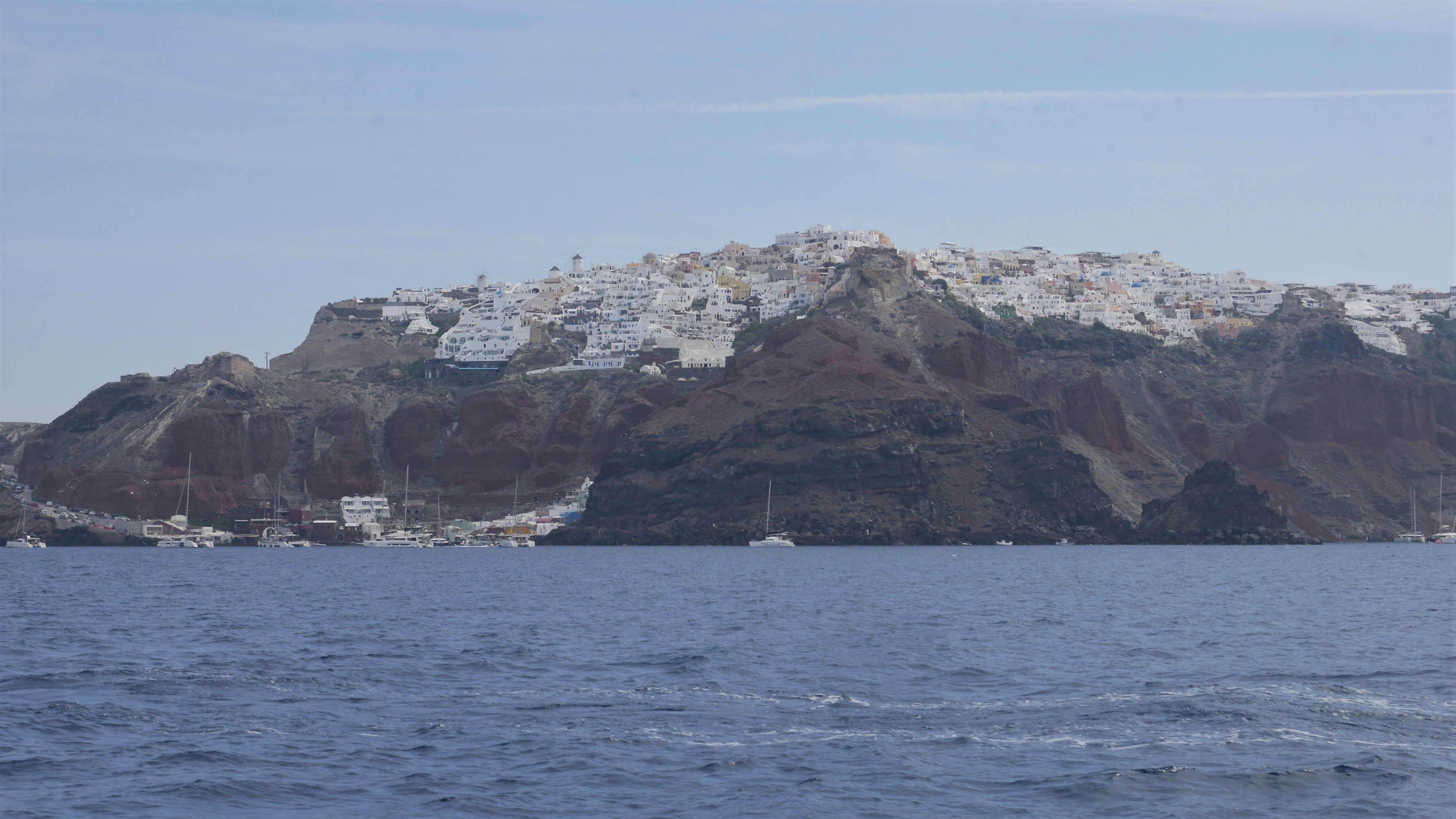
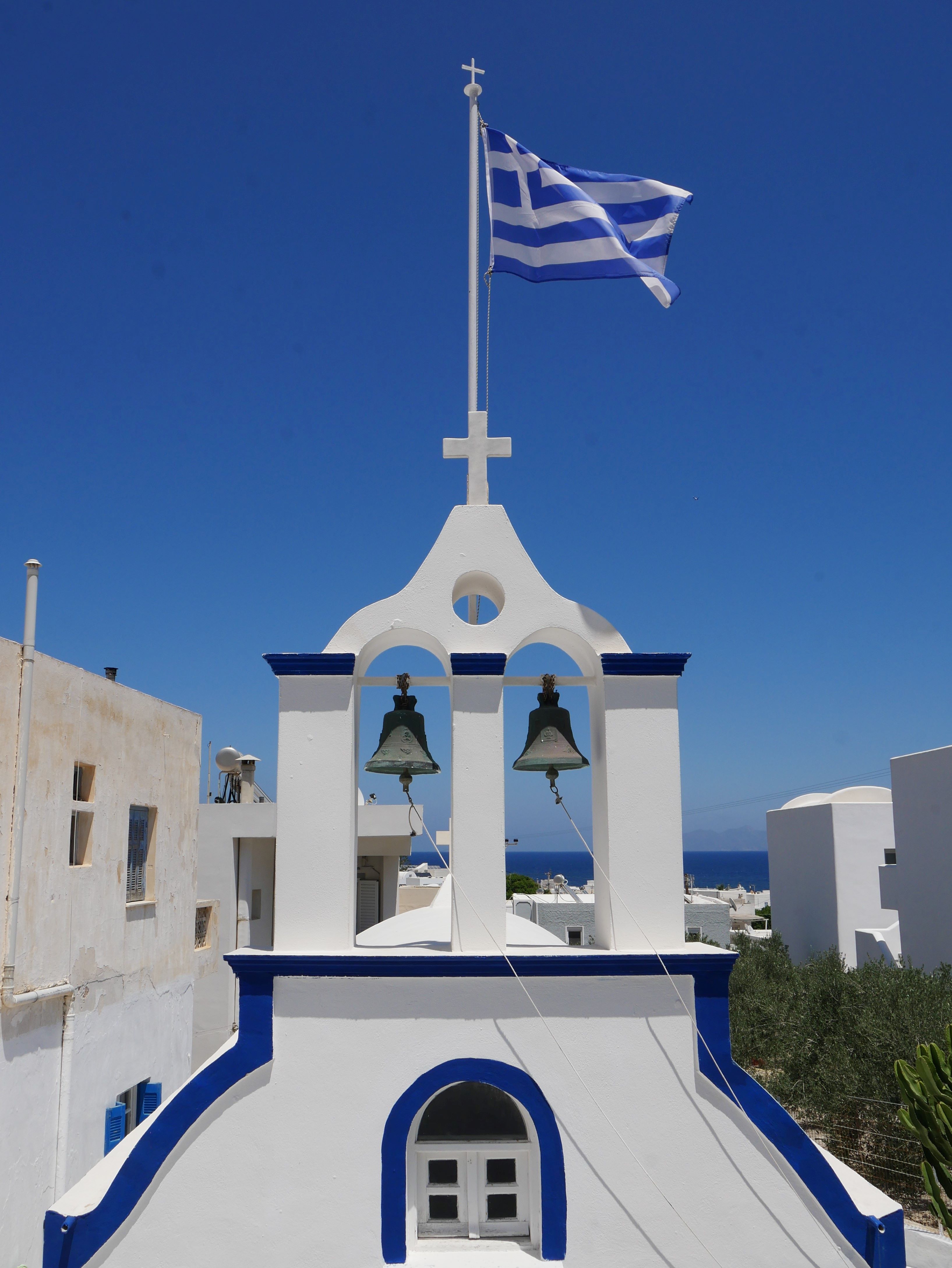

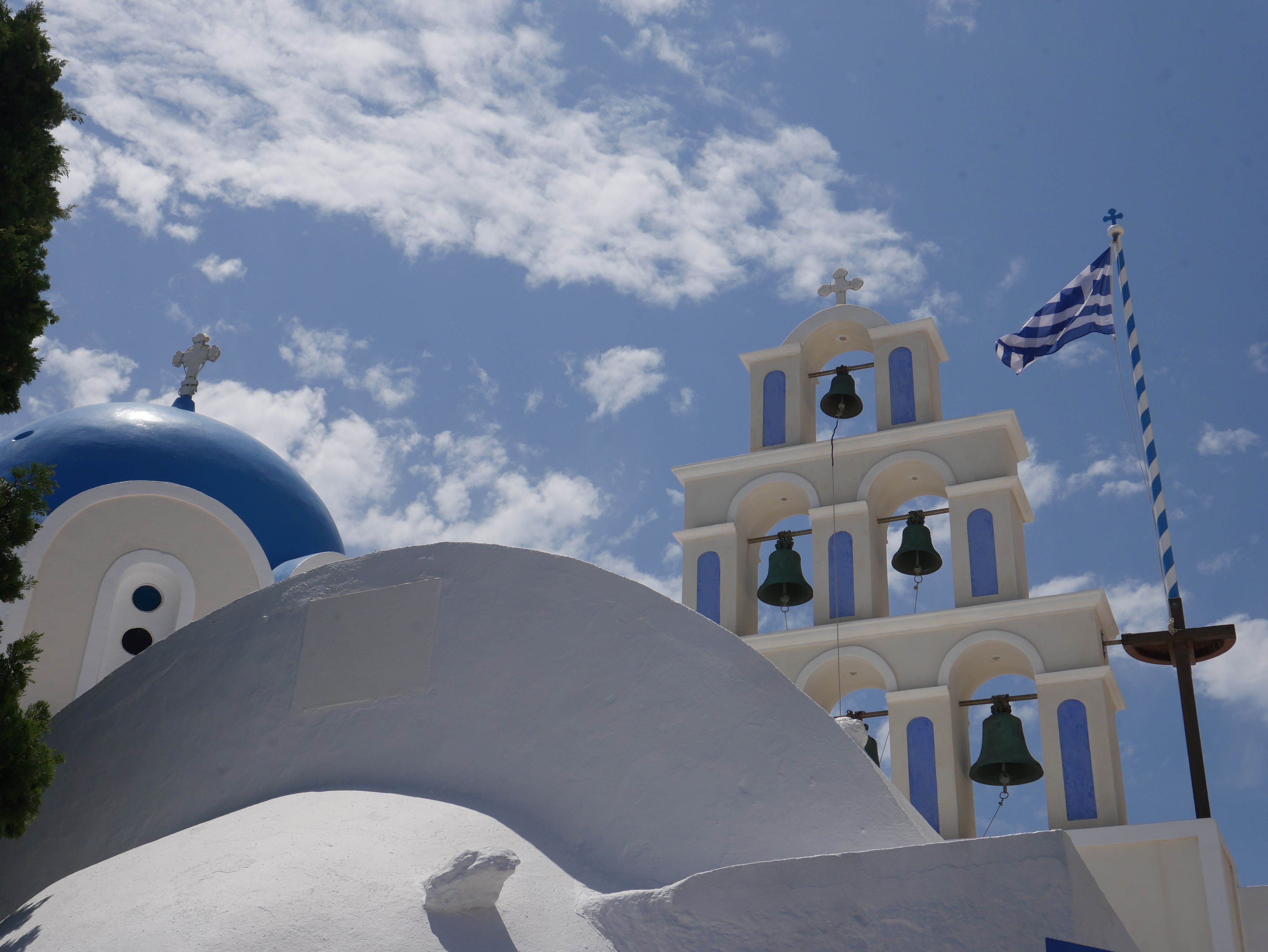
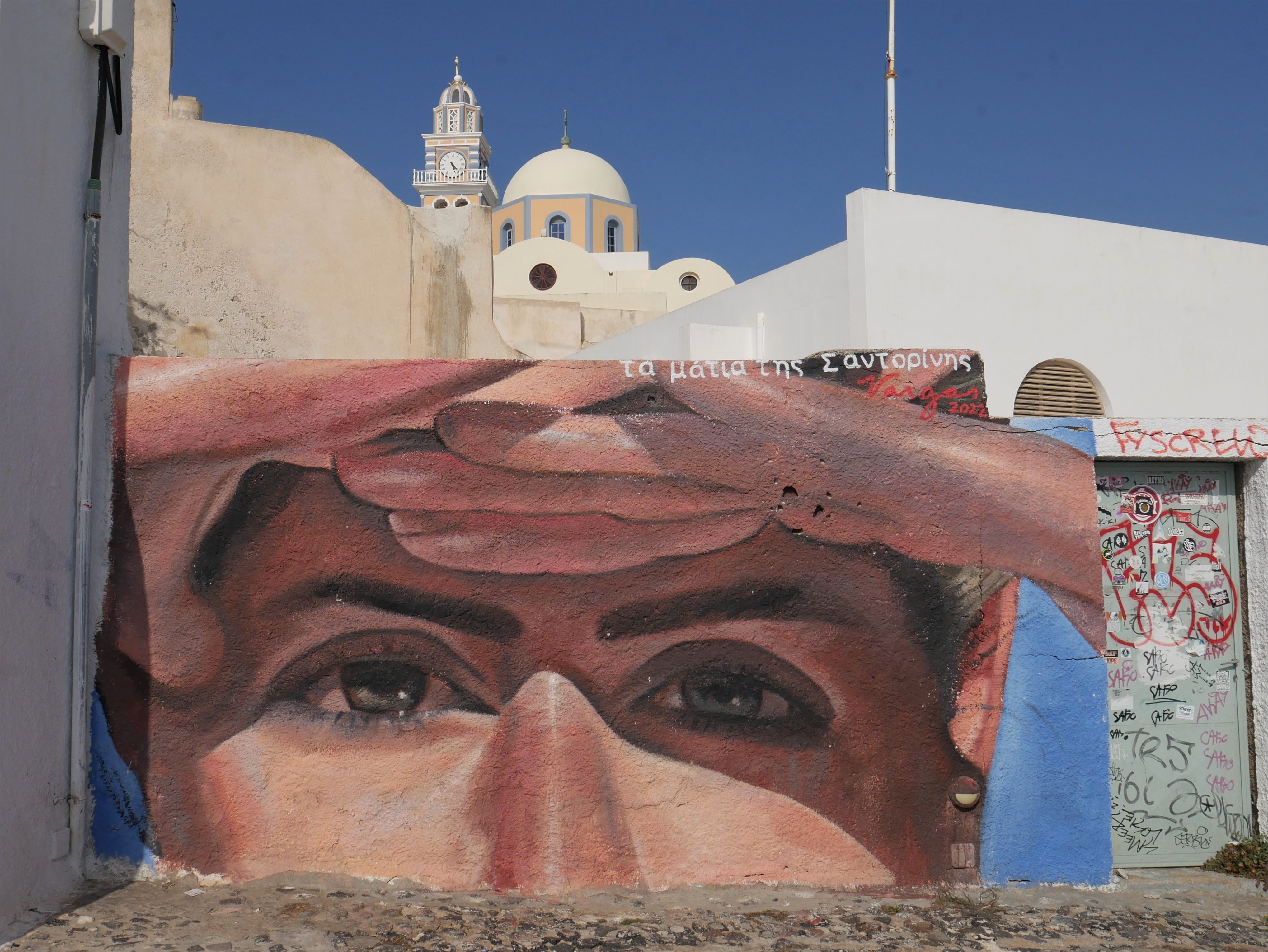
It is both exhilarating and unnerving because, judging by the number of boats already plying the bay, we now understand why it is so tricky to find a suitable anchorage around here. It is either going to be rough and expensive mooring near the few main access points, or remote and exposed outside the caldera.
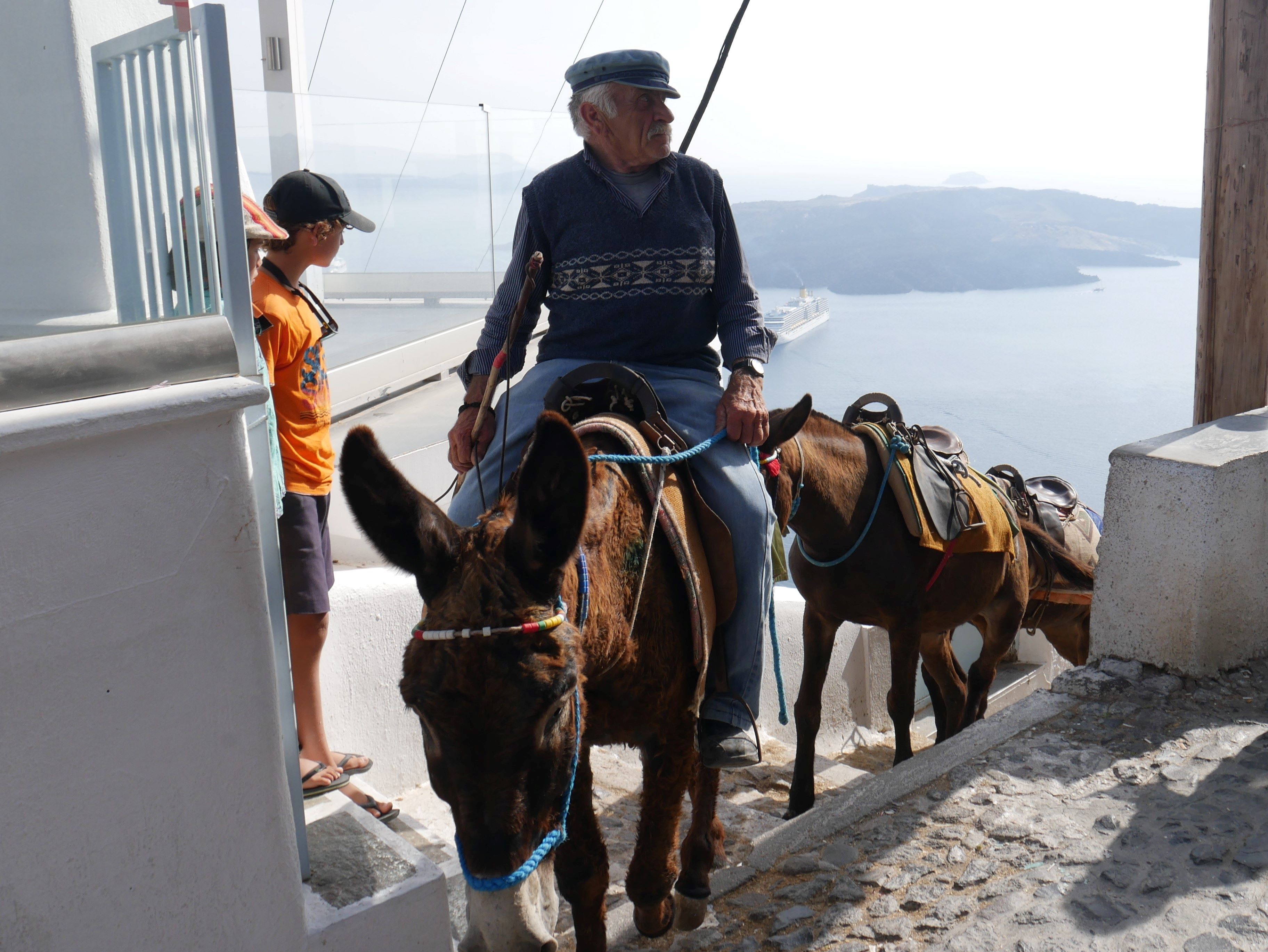
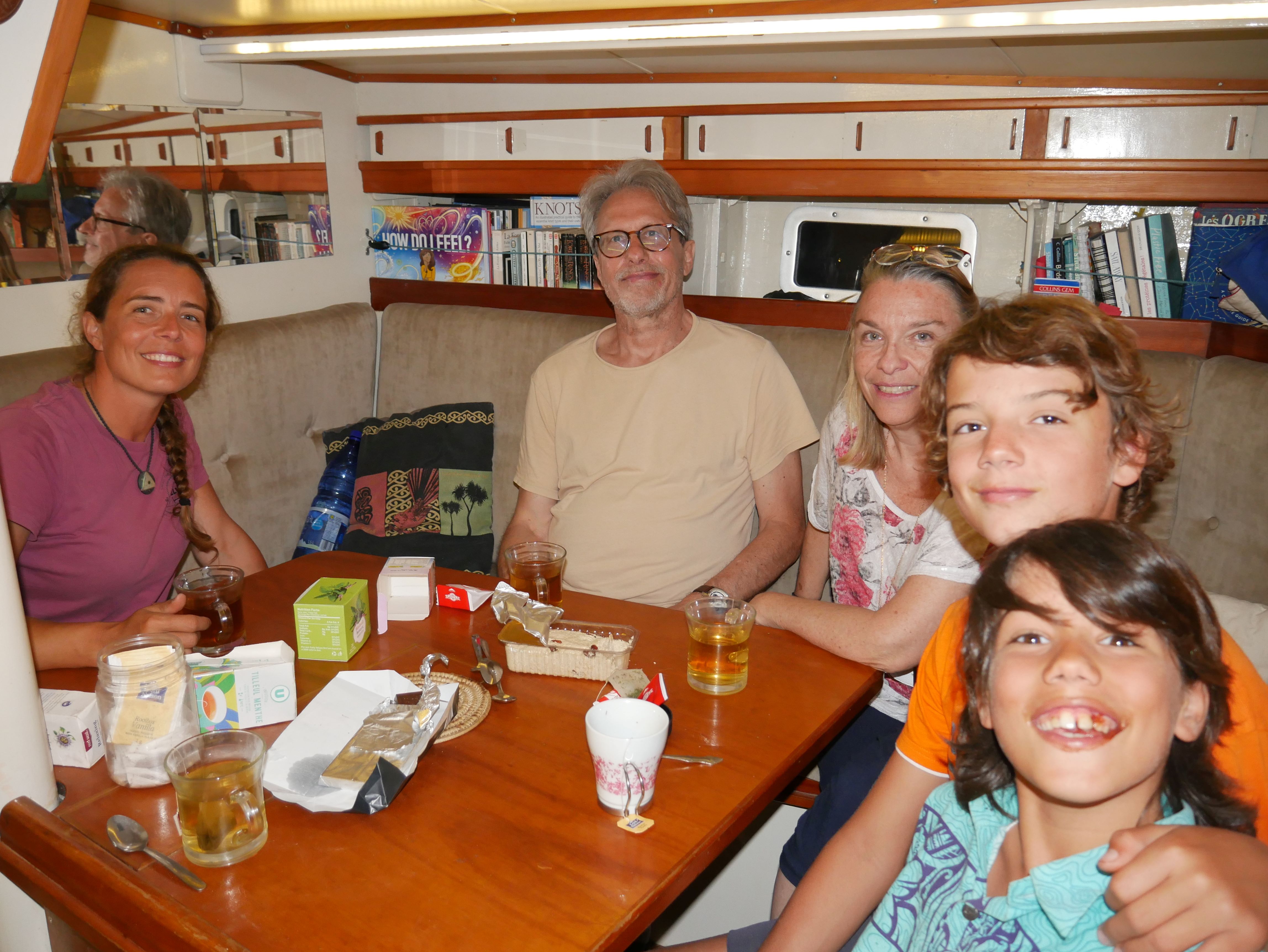
Finally anchored in Akrotiri, a small fishing settlement in the South of the island, relatively quiet albeit rolly, and still surrounded by thirty or so boats, we spend the afternoon with my uncle Dominique, who, after holidaying in several locations we’ve visited over the past year, happens to be sightseeing in Greece, for once with impeccable timing. He picks us up from the red caldera with his rental car for a walk in the village of Thera (a.k.a Fira) where we elbow our way through the narrow streets and stairs amongst sightseers of all nationalities (amongst which our Slovenian friends Staša and Borjan), as well as donkeys, and have an early dinner at a taverna terrace, hopeful to witness Santorini’s praised sunset, regrettably concealed by heat fog.
One last drink at the boat and we say our goodbyes, calling an early night after a long day at this overwhelmingly busy destination, leaving us pondering on the disastrous paradox of mass tourism, which seems to spoil the very essence that compelled us to visit in the first place. As a general rule, I like to visit destinations where tourists don’t outnumber locals so that, as an observer, I only marginally upset the delicate balance that creates the atmosphere of a place. Epic fail on this one!
Part II: Off the beaten path
When I return five days later with Dad, after my brother civil union celebration, Thomas and the kids have spent their time fixing stuff on Obelix and relocating it to Perissa, another coastal village with a black sand beach.


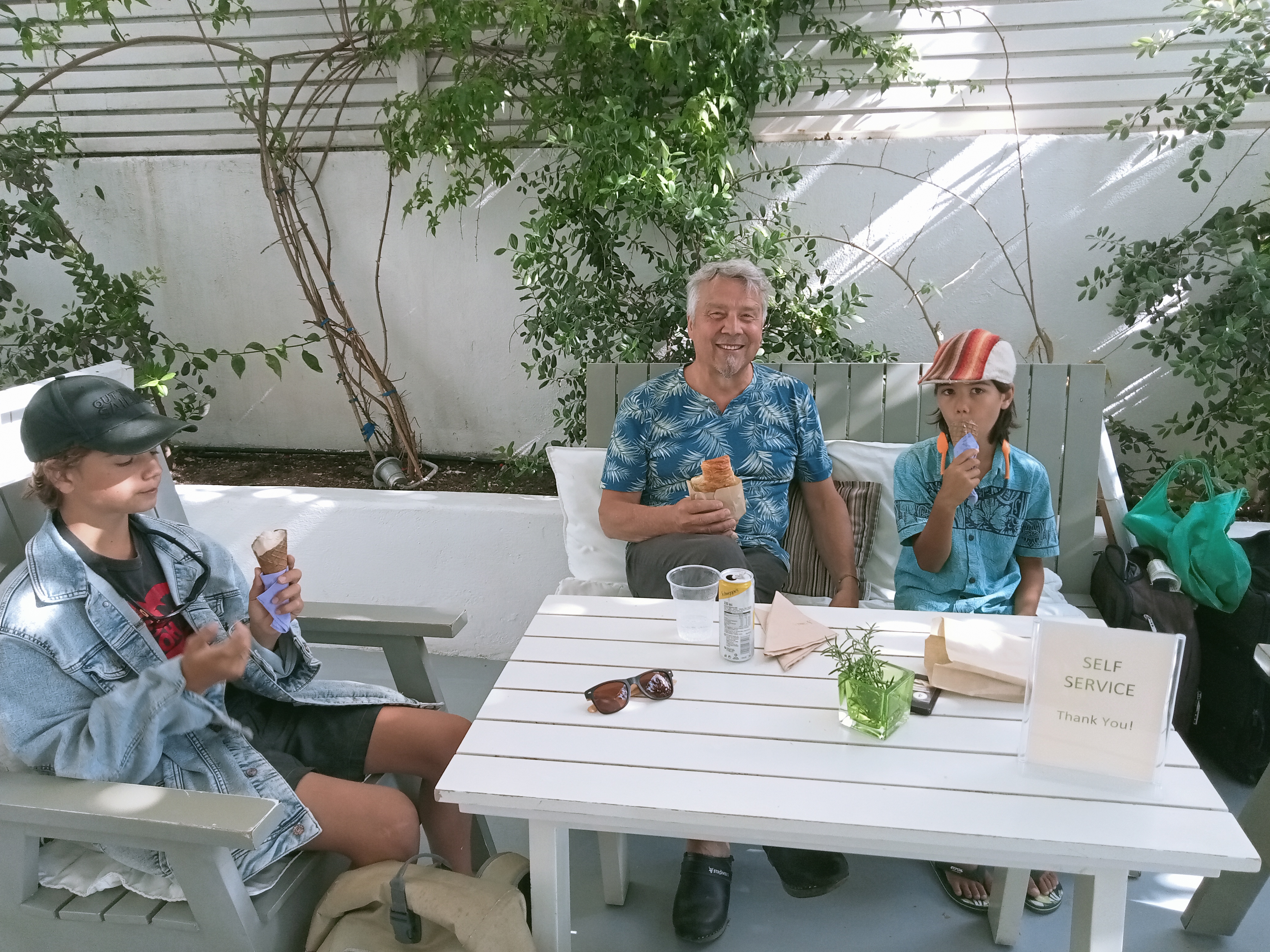
We’re welcomed by the traditional colourful banner held by Zephyr and Azur and off we go by bus, stopping in Thera, for afternoon tea and admiring the view. We initially think of having drinks at the classy Kaliya with its alluring (and ultra-instagrammable) bougainvillaea-lined ceiling, but its expensive menu (cocktails ranging from 14 to 230 Euros, and wine bottles up to 860) deters us from lingering and we settle for iced coffee, ice cream and cheese pie at the more laid-back self-service café downstairs.
When we reach Obelix and dad turns blemish after a few minutes due to the unsettling swell, we quickly agree to leave the boat do its rodeo alone for dinner ashore. We order a selection of Greek mezze, including the mouth-watering bougiourdi (consisting of baked feta, kasseri, tomatoes, and peppers seasoned with garlic, oregano, and olive oil) at a family-operated taverna on the beach where a duo of mandolin and guitar provide a masterful on-theme folkloric soundtrack.
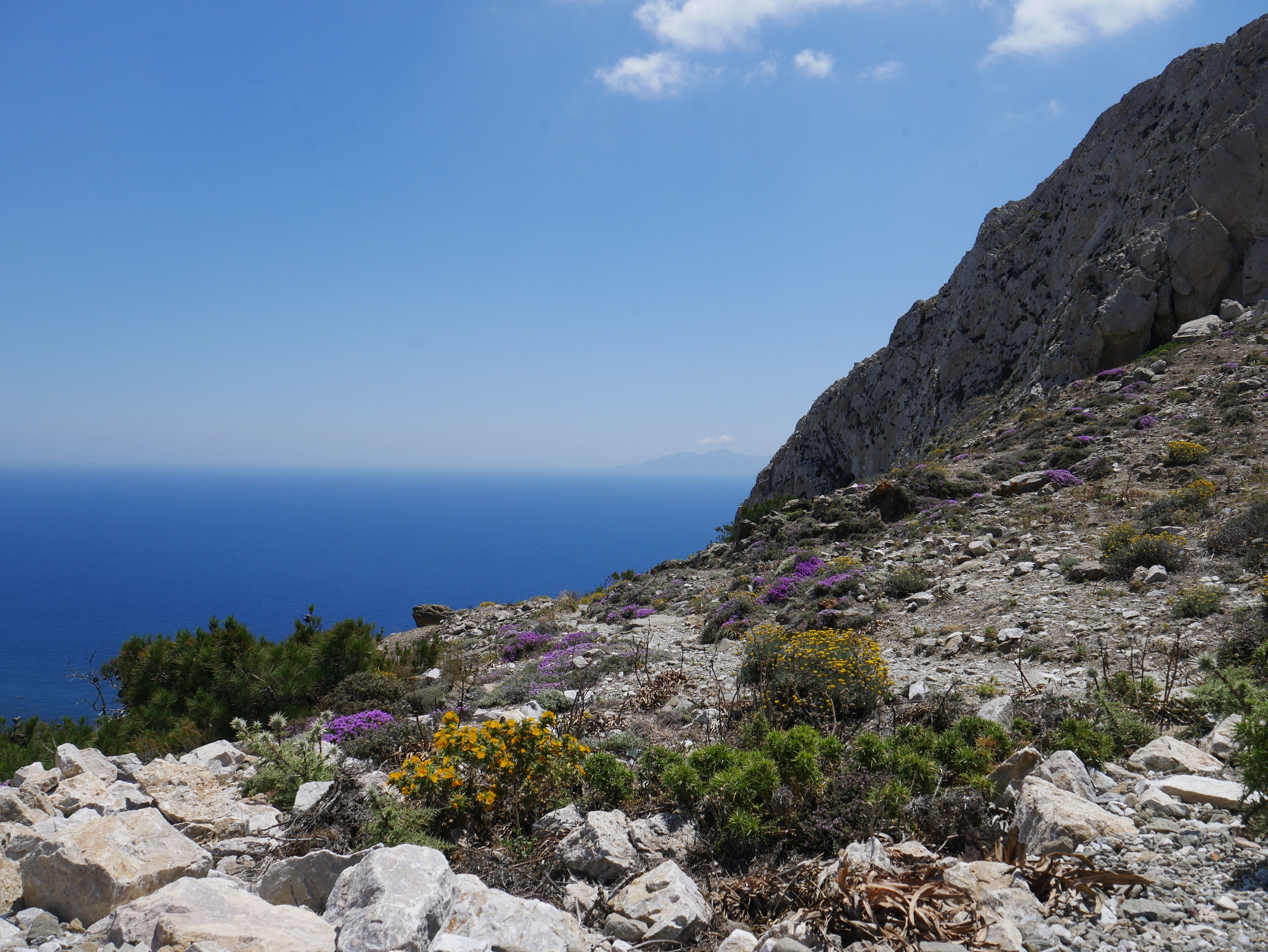
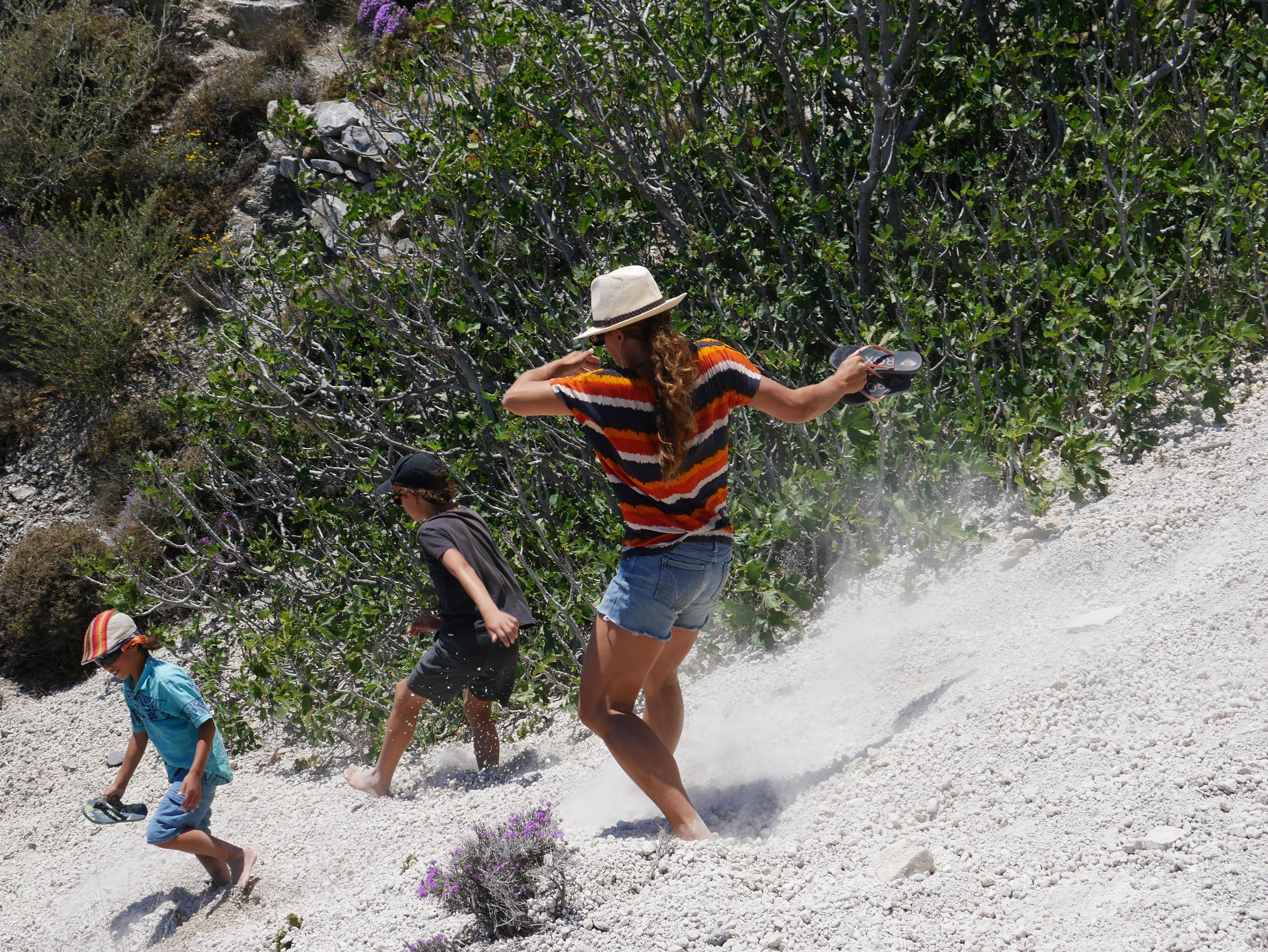
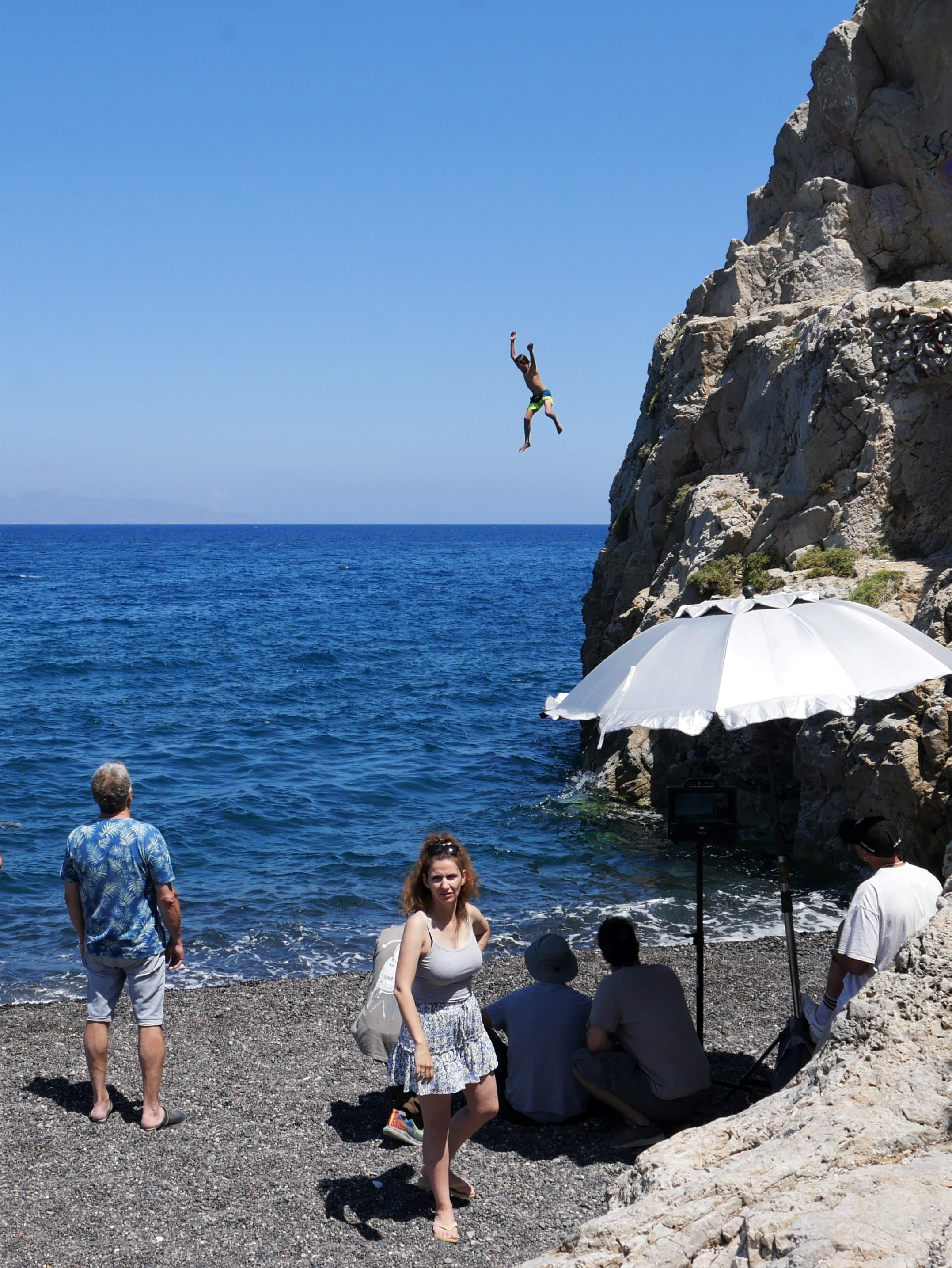
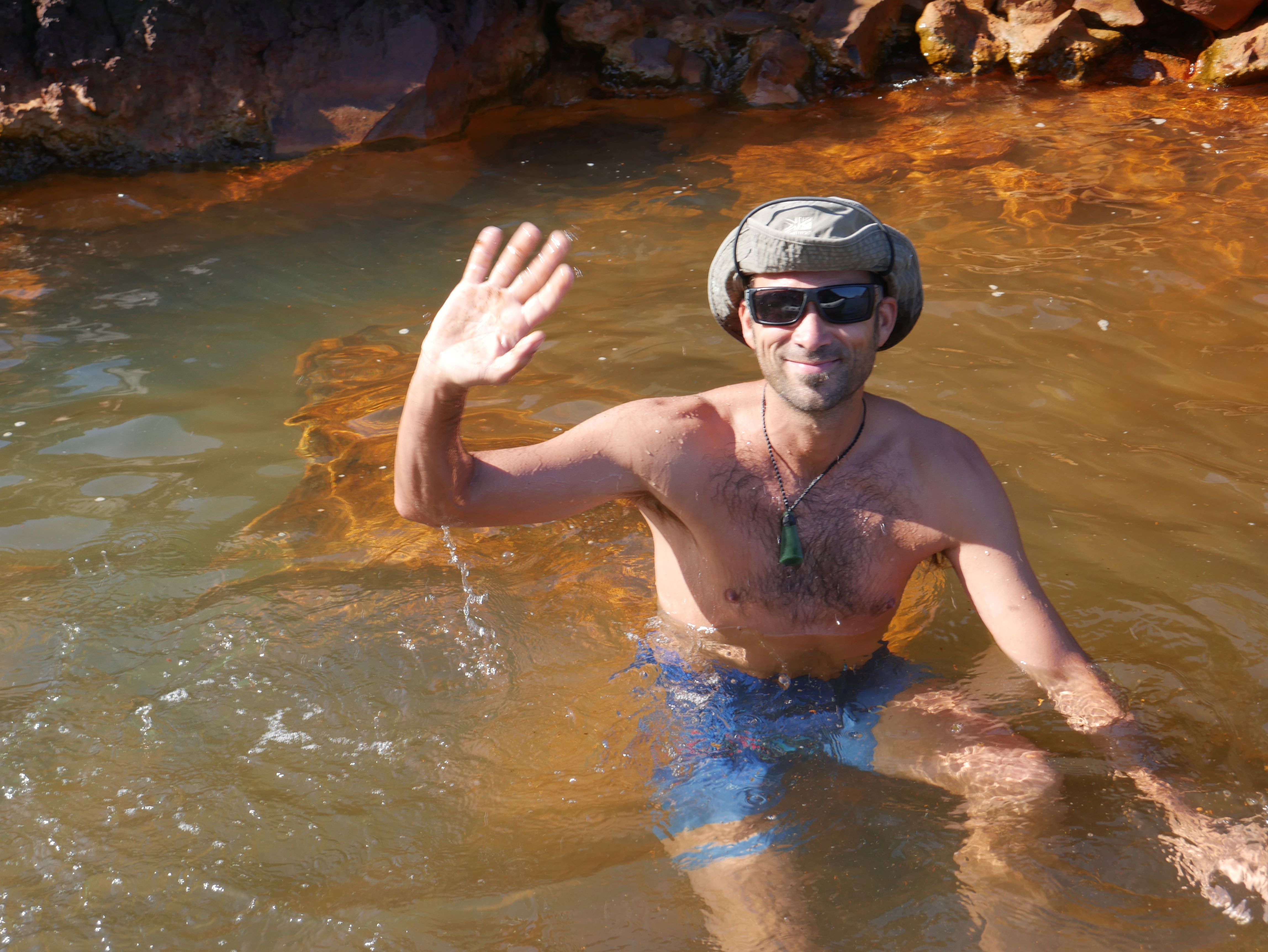
The wind forces us to extend our stay in Santorini for a couple of nights, and despite the main villages drowning under mass tourism (Thera and Oia), we manage to escape the crowd at the less popular sites and hike virtually alone between Perissa and Kamari, visit the island sole fresh water source (ridiculously insufficient for the island’s current needs, and thus supplemented by winter rain water collection but mainly desalination plants to cope with tourism development) where we have lunch without meeting a soul, jump in the water off a cliff (which access is disputed with a TV crew shooting a commercial that day), race through a scree of pumice stones and finally bath in supposedly-hot-but-rather-lukewarm springs on our last morning, on our way to Folegandros.
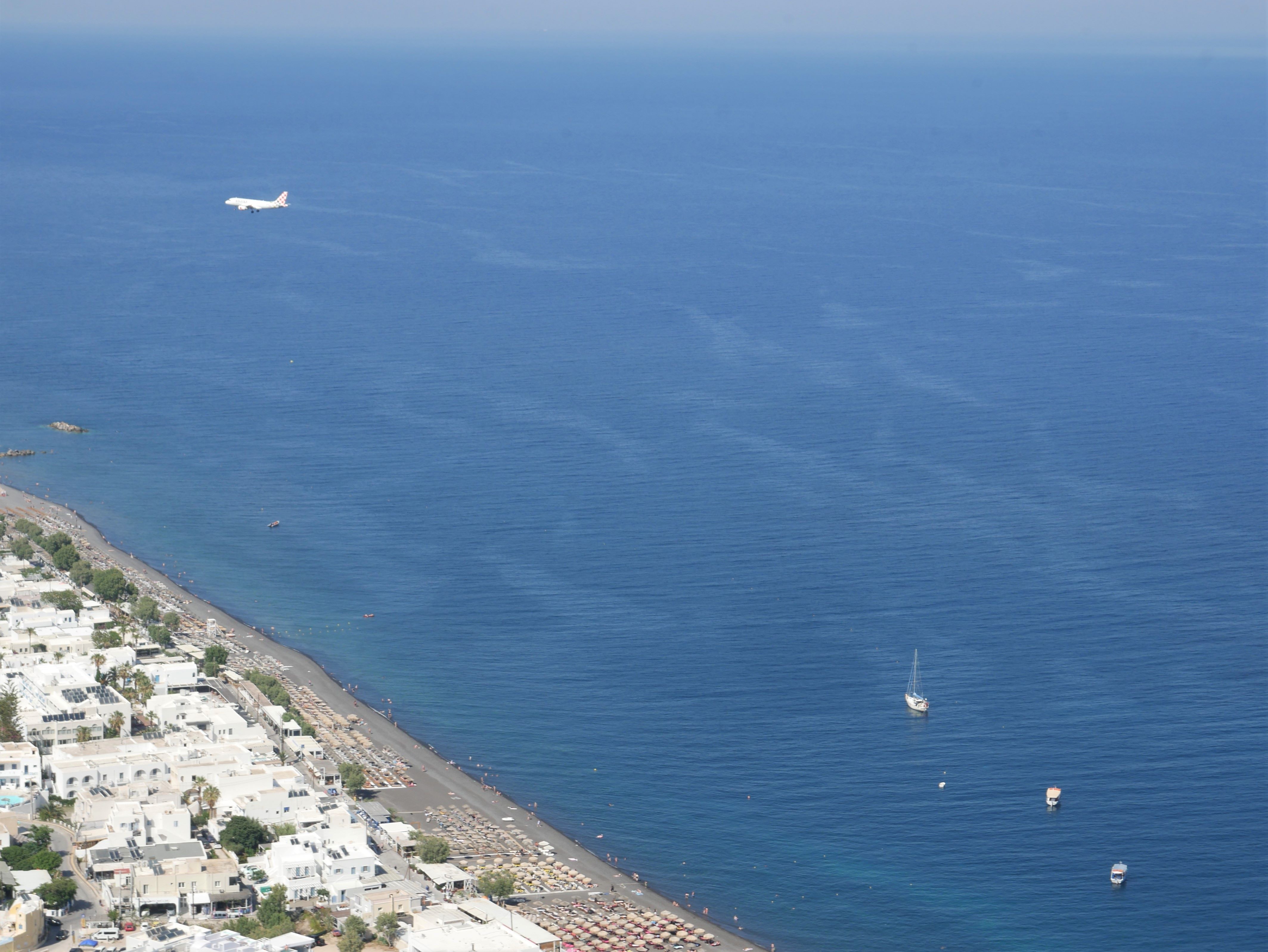
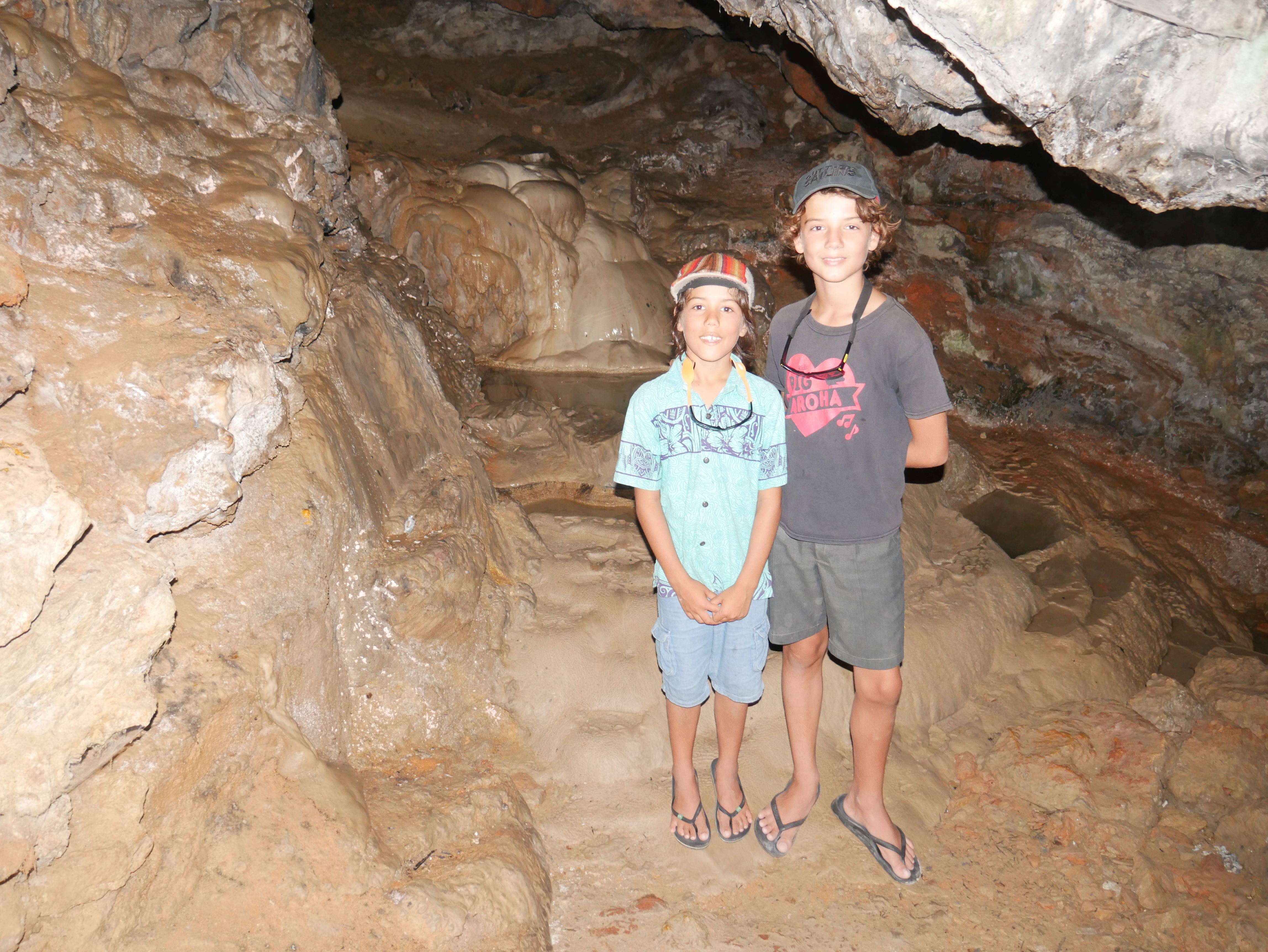
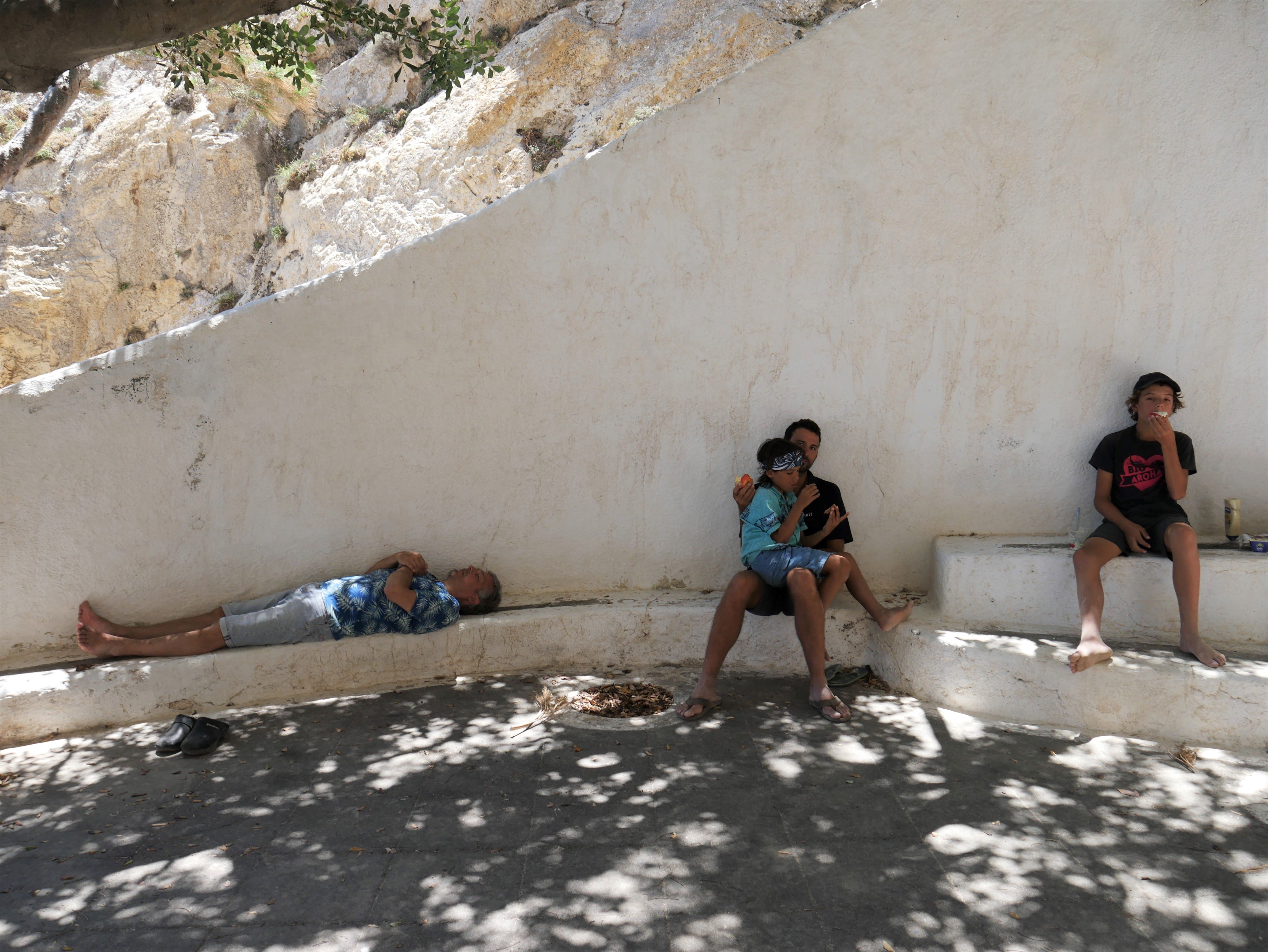
As Staša puts it, there are two types of Greek islands, those with an airport and those without. With a taste for secluded places with authentic charm, we naturally favour the latter, but can’t complain (too much) about our experience in Santorini after all.
 Obelix Odyssey