
Or how Azur ended up blowing his tenth birthday candles in a monastery.
Hozoviotissa. Such a peculiar word, that tickles your tongue, sounds like a mantra, and seems to elude you unless repeated religiously. A word that appeared in a dream to Dimitri, out of the (big) blue. A quick internet search revealed it was the name of an eleventh century orthodox monastery partly carved out in and hanging from a cliff in Amorgos, at a dizzying 300 metres above the Aegean sea. Versed in spirituality as he was, Dimitri saw it as a sign it was time to pay this monastery an extended visit.
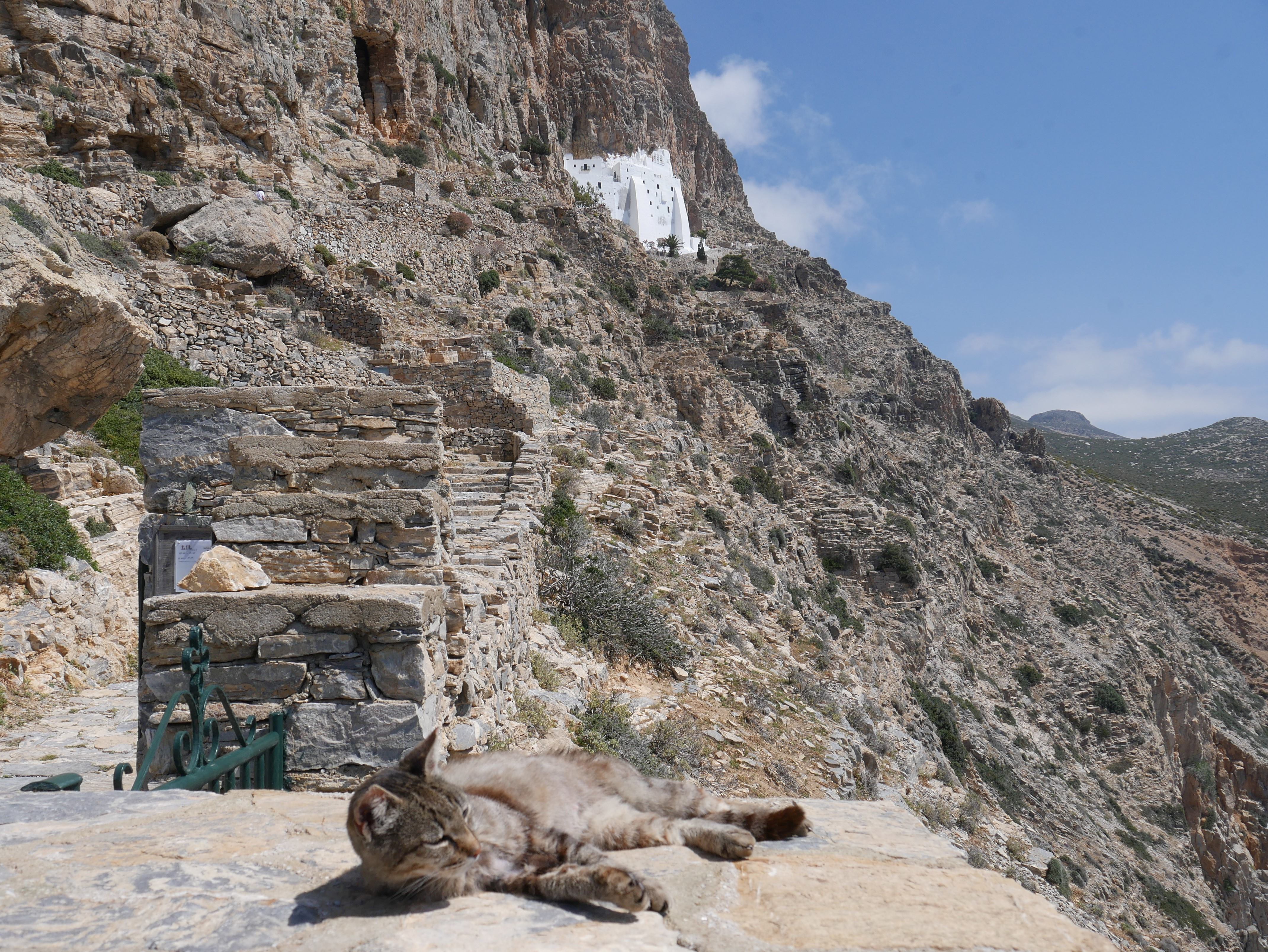
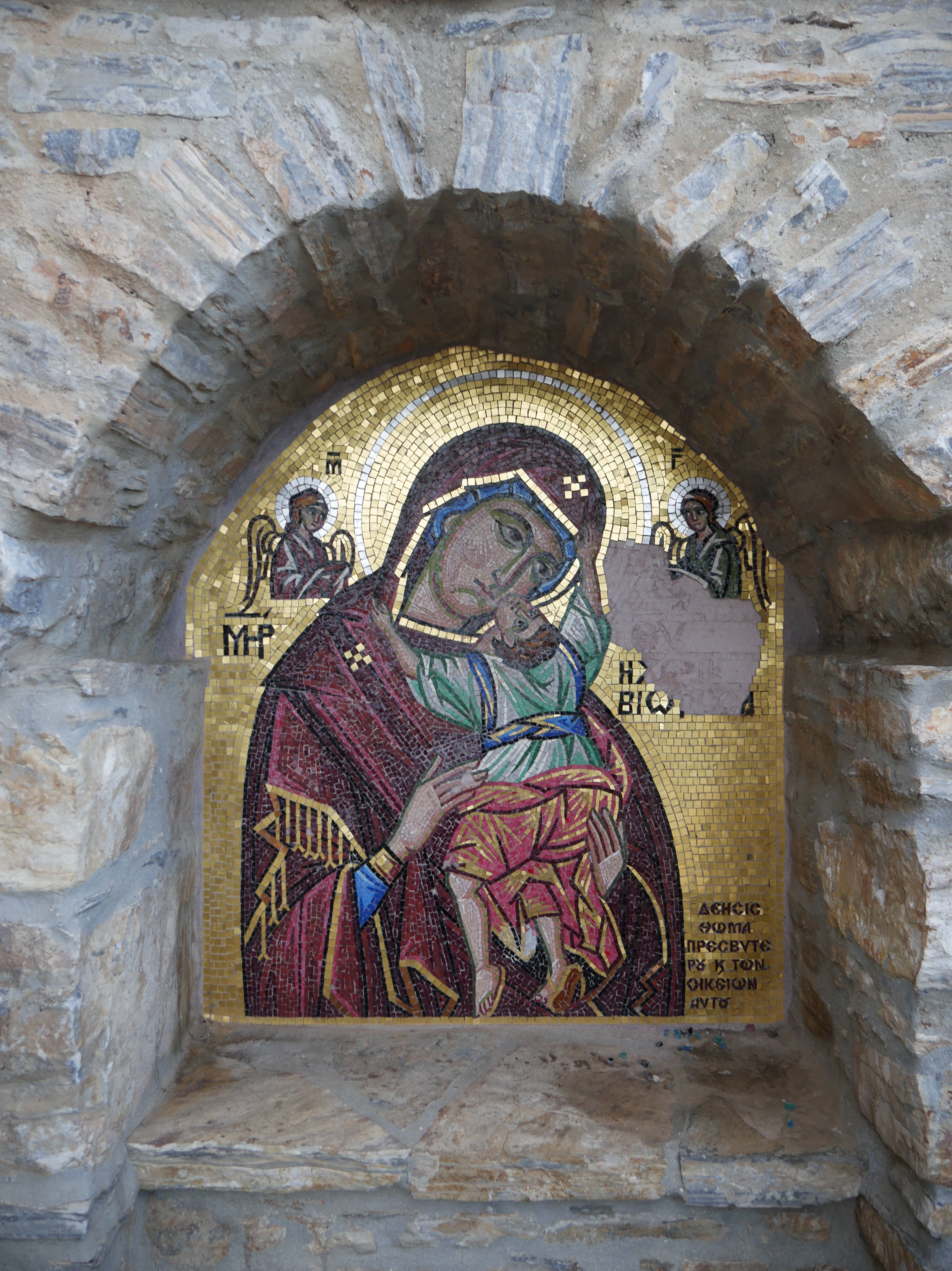
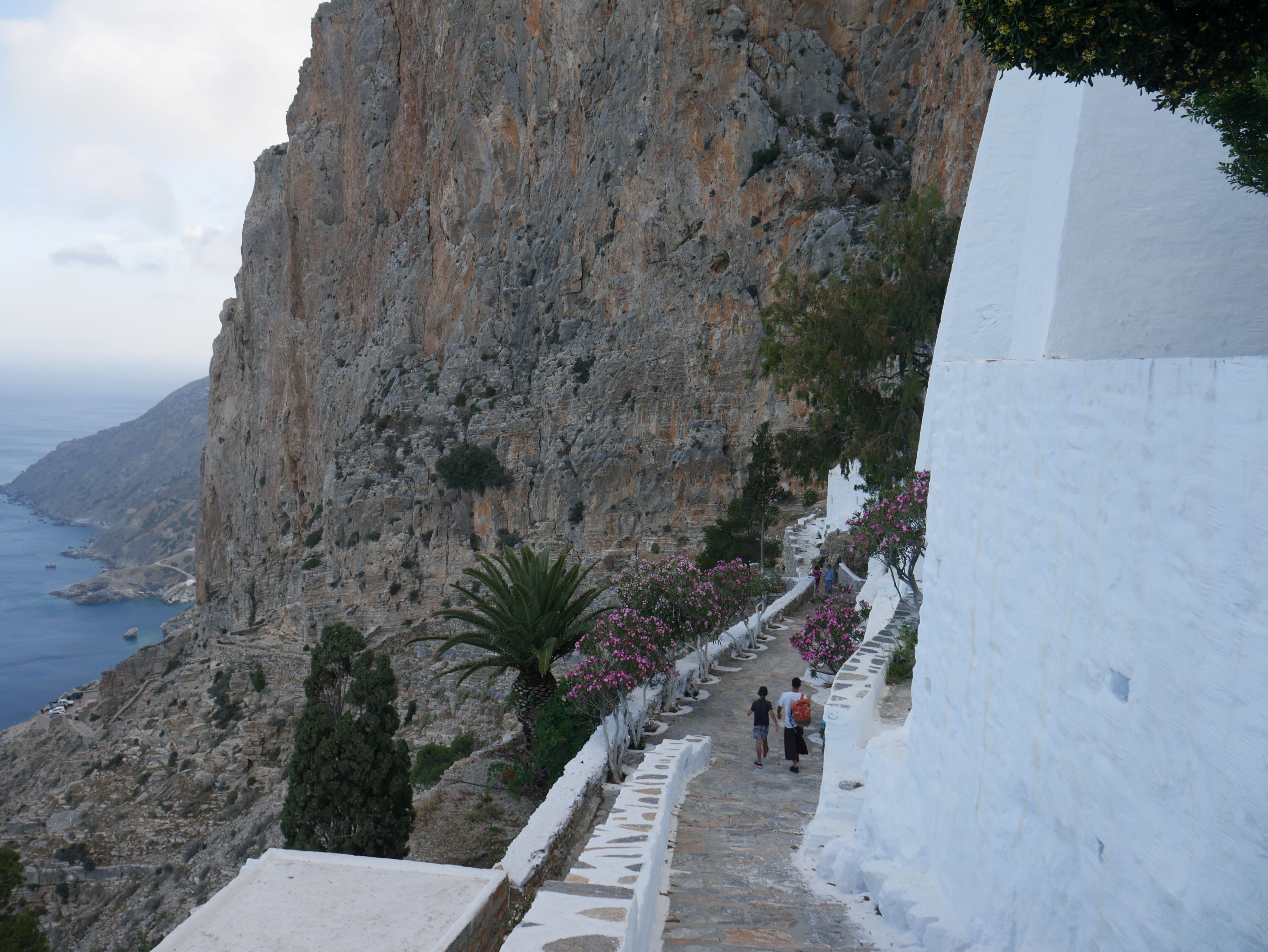
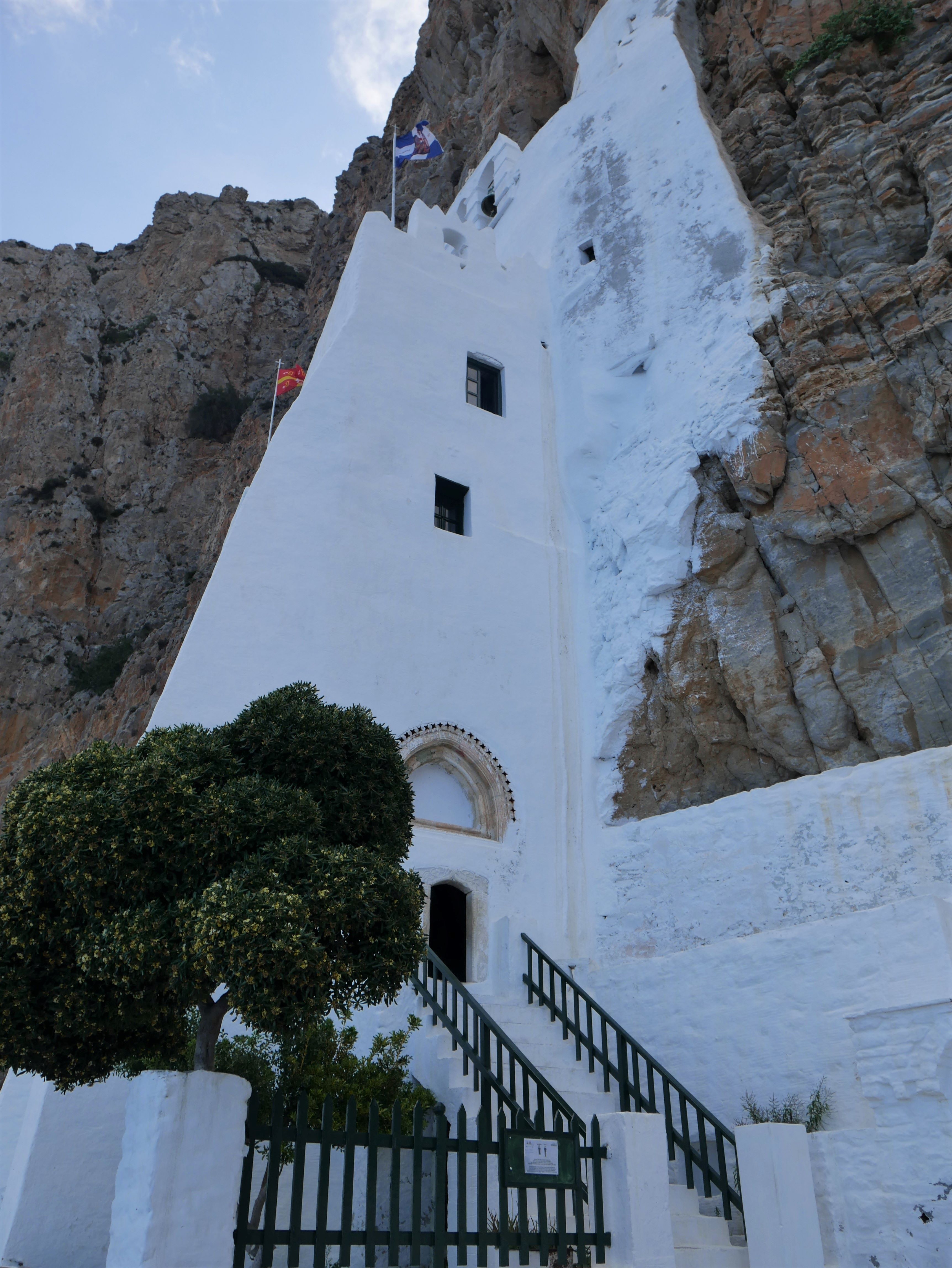
After twelve years in France working on Artificial Intelligence, this expatriate Athenian, a good-looking clean-cut young man exuding kindness and serenity, returned to his home country to plead his case with the monk in chief. They met as an exercise of potential flatmates interview, had the mutual feeling of having known each other for a long time (even though Orthodox Christians discard any idea of reincarnation, as Dimitri took care to specify). A friendship was born, and Dimitri settled in the spiritual haven of Hozoviotissa and became, if not a monk just yet (refusing for now the plea of the two resident monks, as he finds that wearing the traditional black robe and kalimavkion, in this increasingly polarised world, would be too dogmatic), a very guide for passing visitors, just like us. His perfect command of French made him the ideal person to answer our questions about this strange place, and no sooner had we asked one that he went on captivating us with intriguing tales of spirituality, miracles and serendipity, about the icon of The Grace of Panagia (Virgin Mary) that made its way to the island by boat in the middle ages, or the worker, who one morning found his tools suspended on the cliff a bit further up than the spot initially selected for the building of the Monastery, or how he got baptised in an Indian temple.
We were sharing the audience with a couple of French-speaking Muslims from Tunisia and debated about the role of religion in society, agreeing on the absurd divide animating the world and remembering that one etymology attributes the word a meaning of a relationship building device (from latin religare, “binding together”). We were the only visitors left that day, and on hearing it was our son Azur’s tenth birthday, Dimitri invited him to blow the candles lit up by previous visitors, to help him close the chapel. After we said our goodbyes and before leaving the place in awe, we were welcomed in the mess by another resident for a shot of an unknown beverage and a few Greek delights.
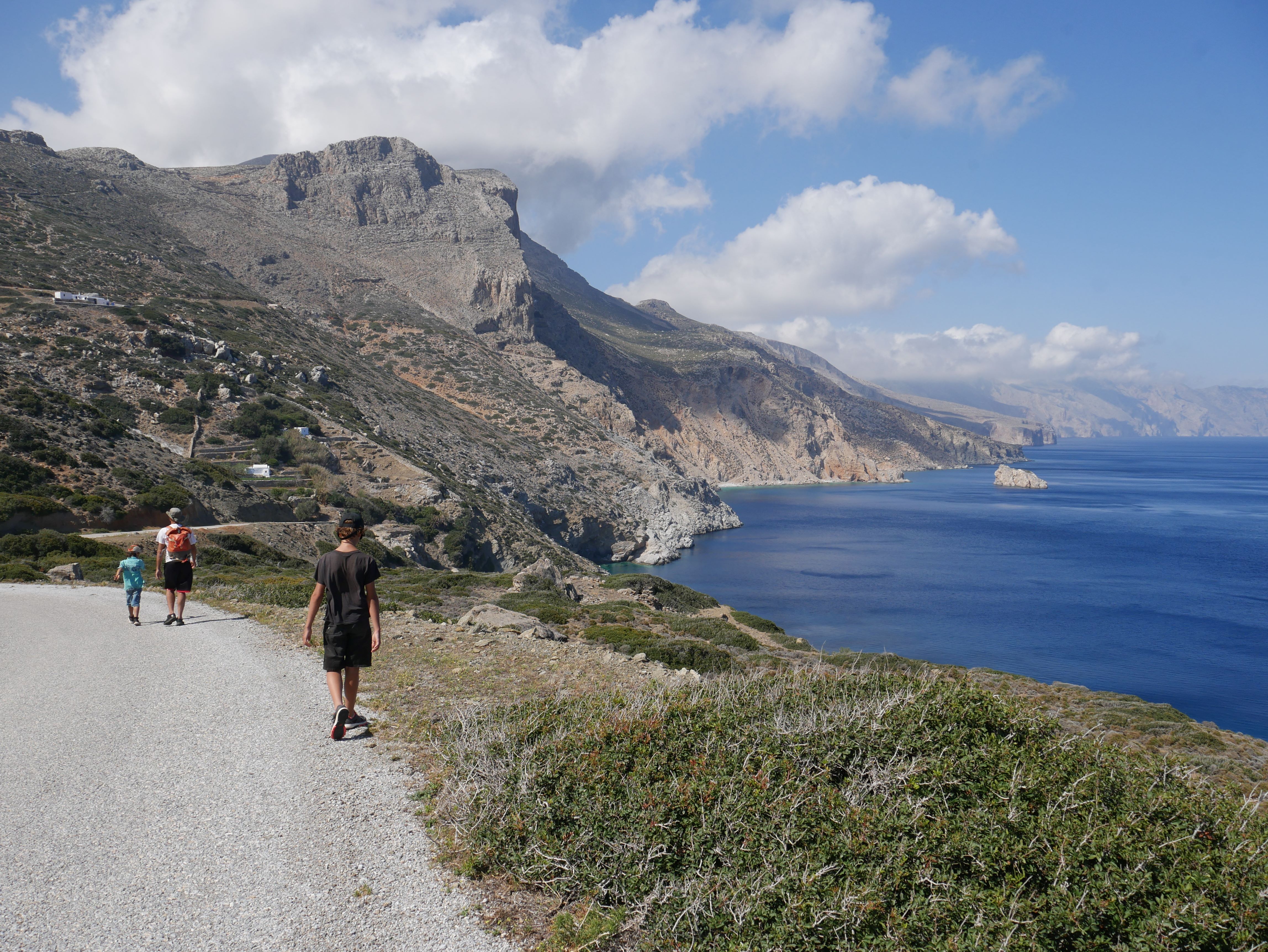
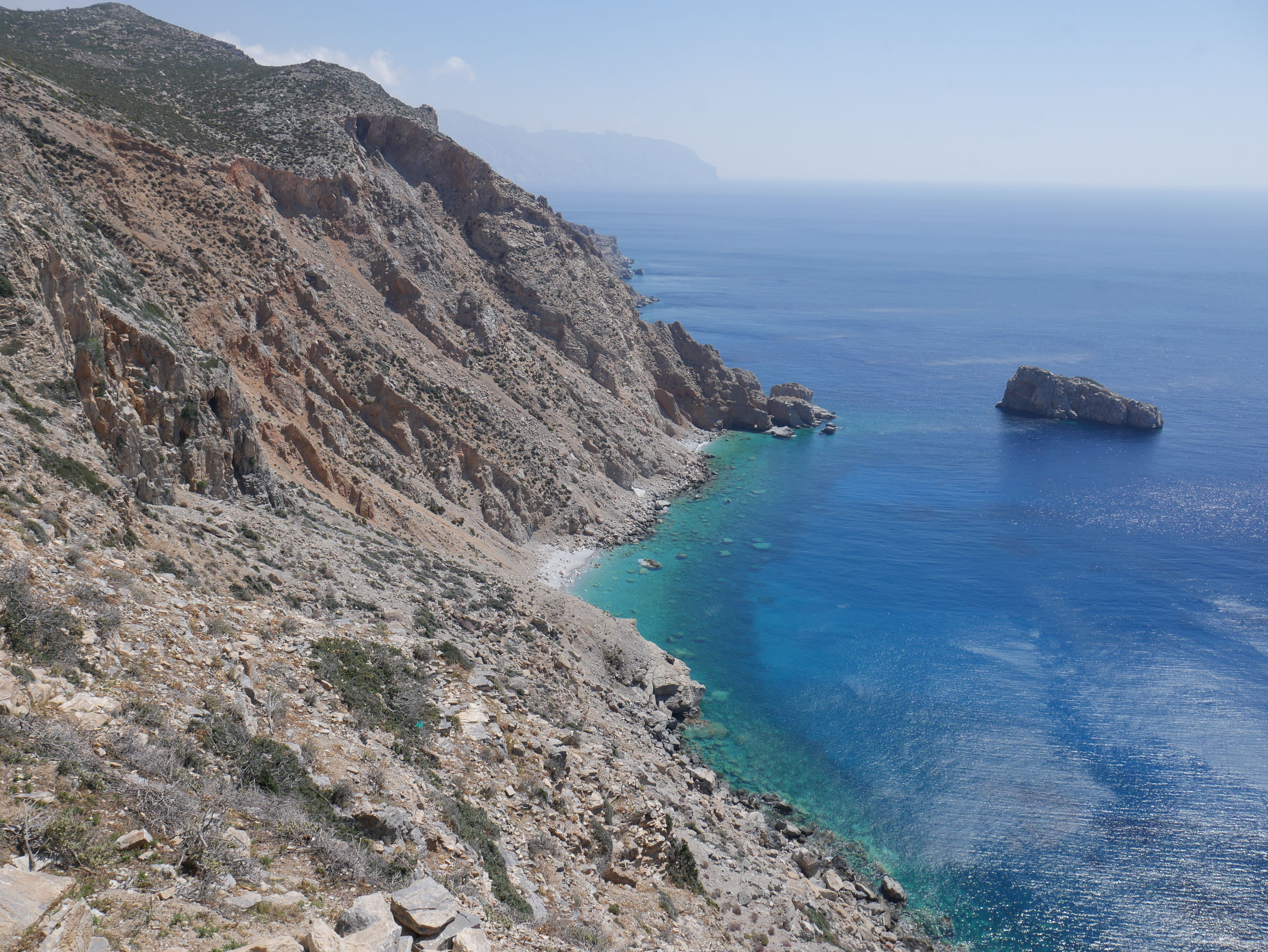
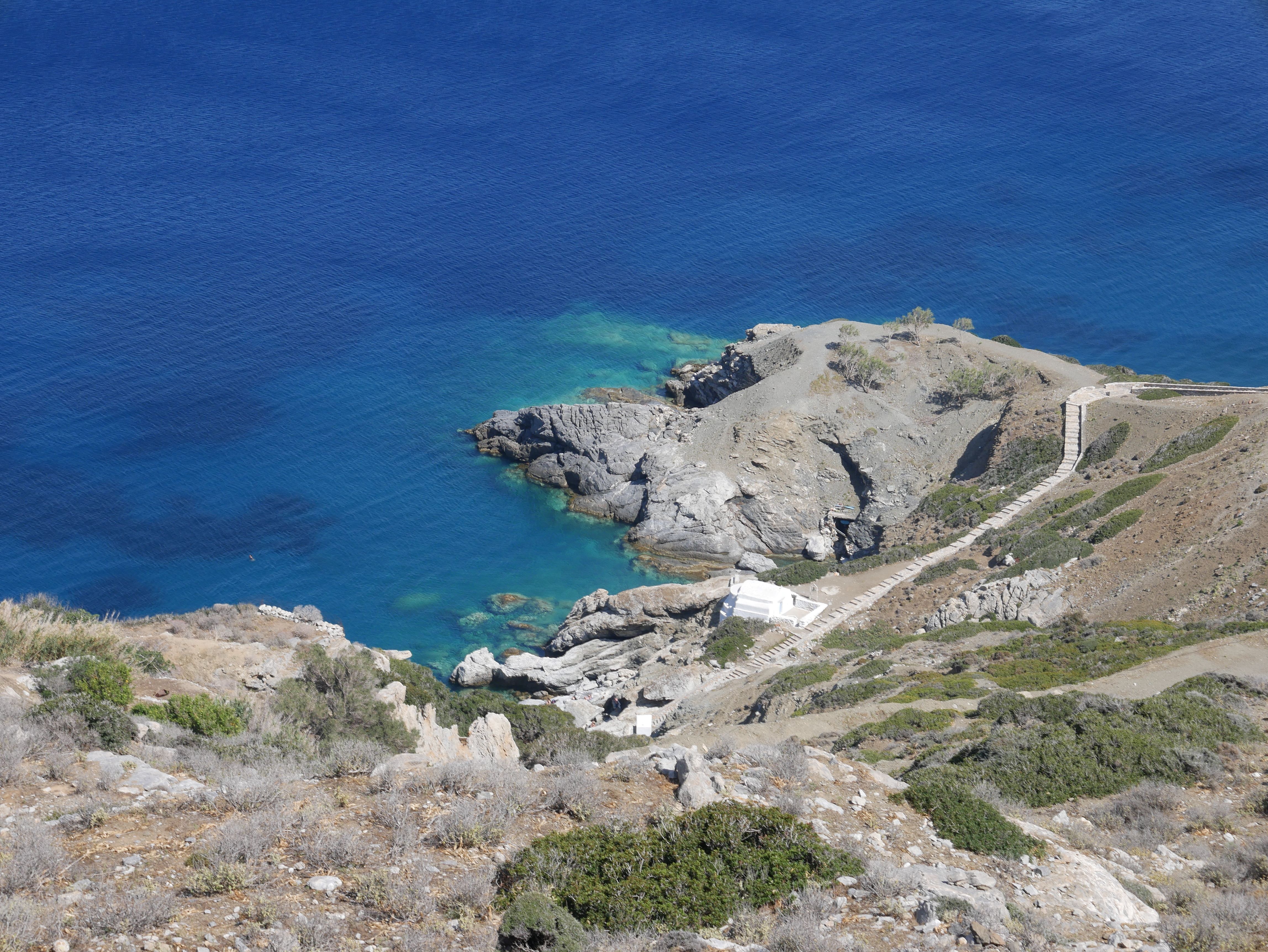
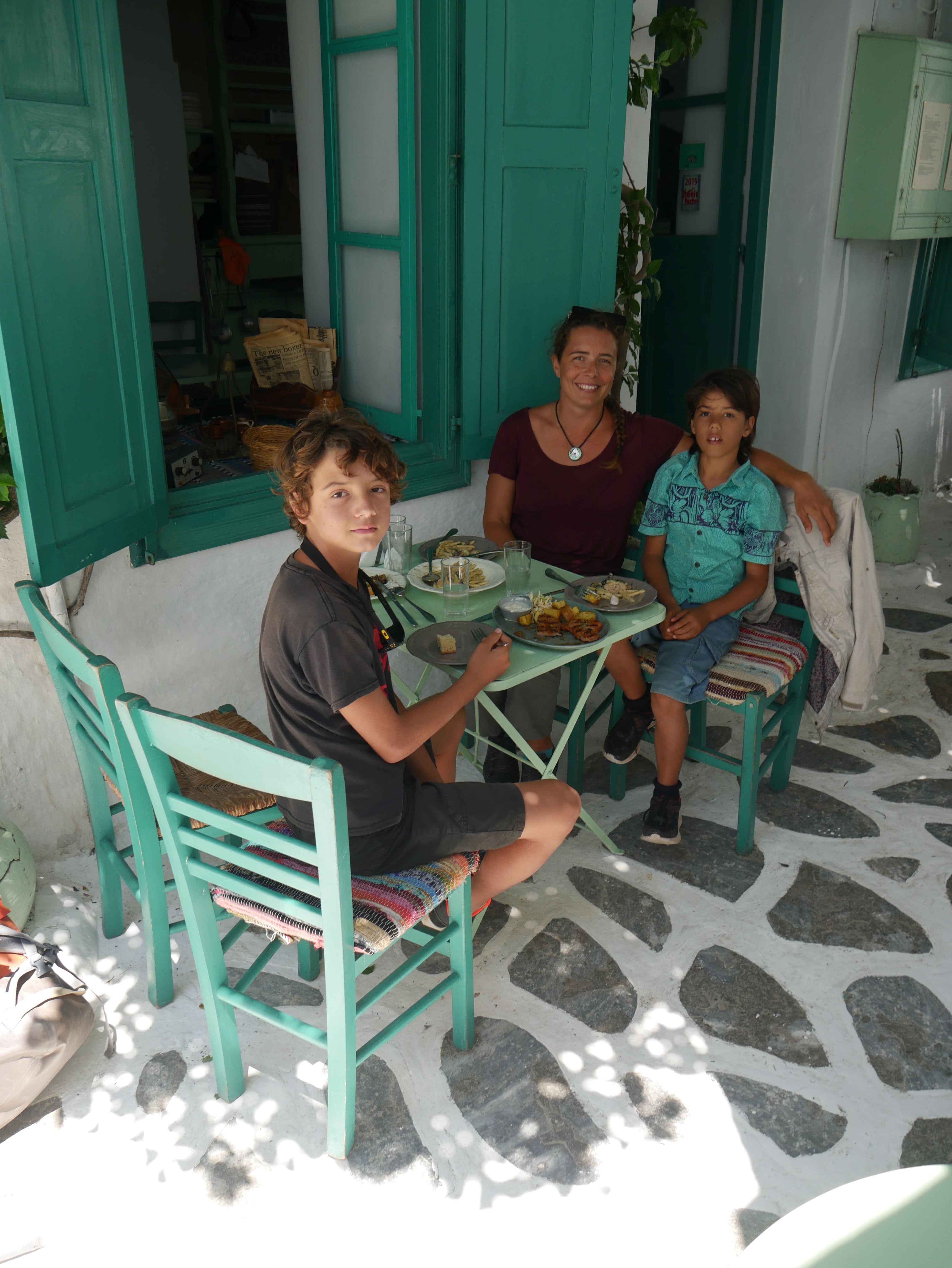
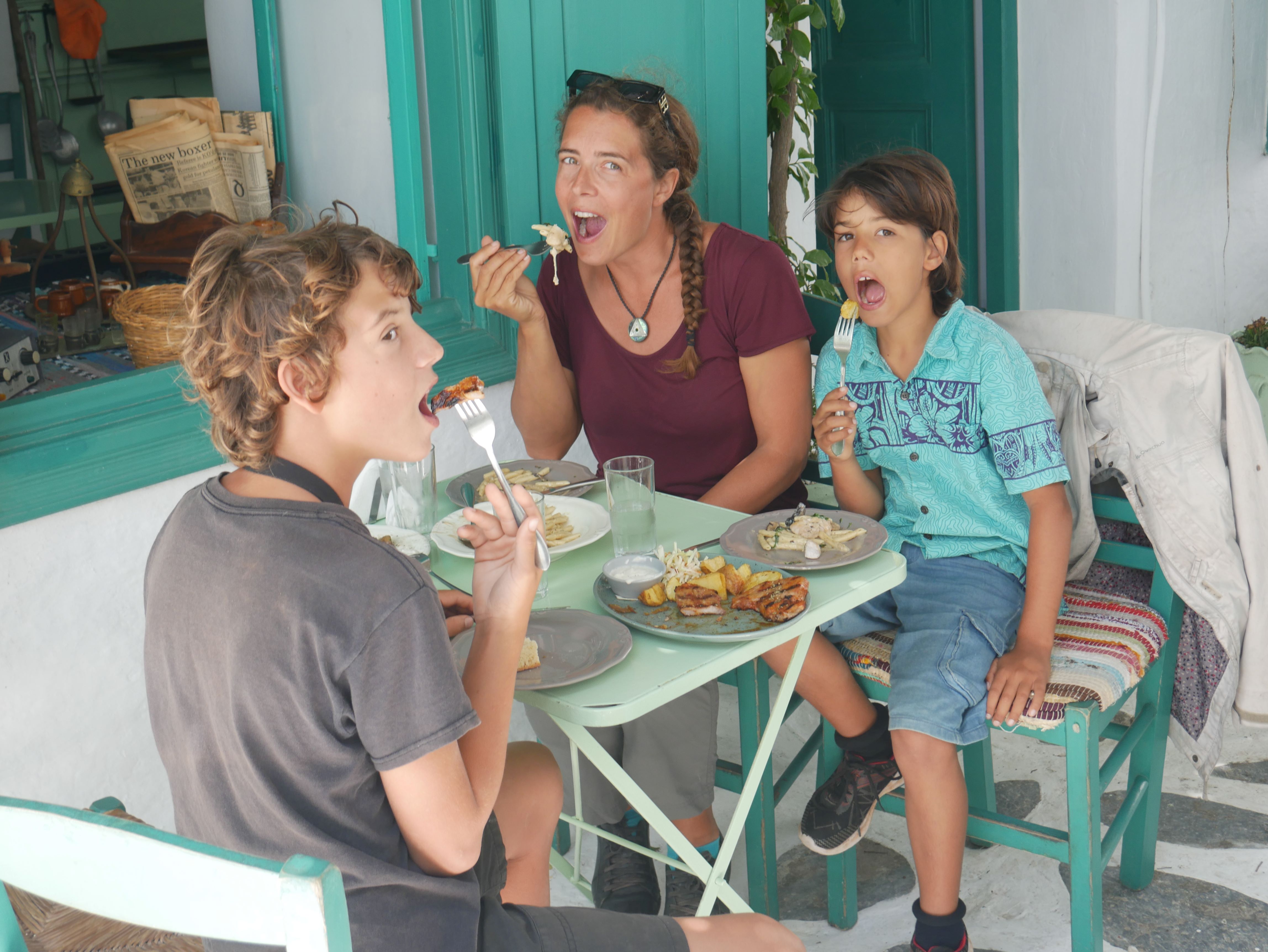
A cherry on top of sorts, after a day packed with scootering to the Hora, having lunch at the quaint Transis-to-raki family restaurant where we feasted on authentically local dishes, a walk down from Hora (where we had left our scooters) to Agia Anna beach (featuring in the Big Blue), skinny dipping there, then sunbathing on the warm rocks, and hitchhiking our way to the foot of the remarkable monastery, ashamed not to have fulfilled Azur’s only request for his birthday which was not to walk (the stroll to Agia Anna had taken us a good hour under a blazing sun).
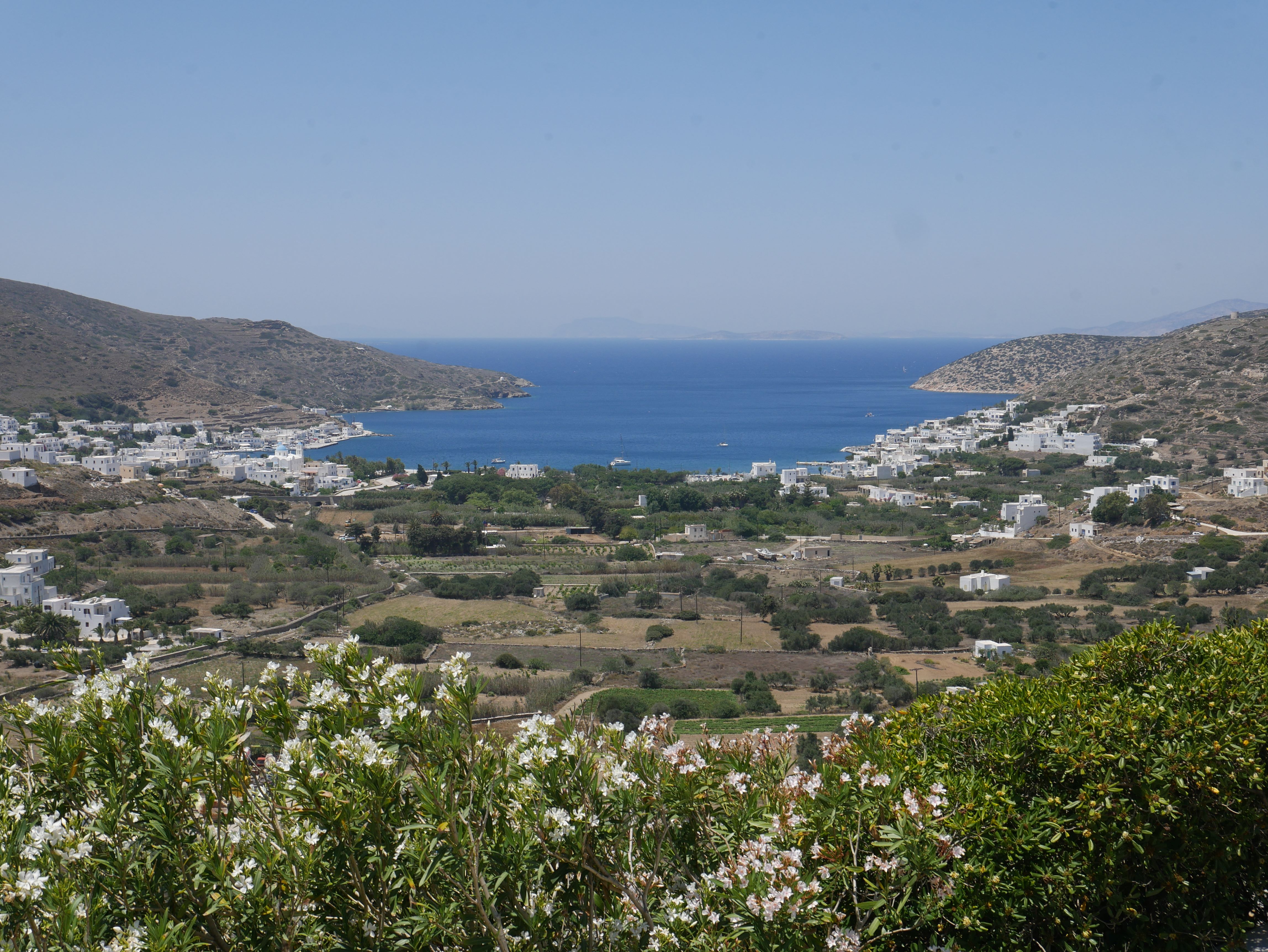
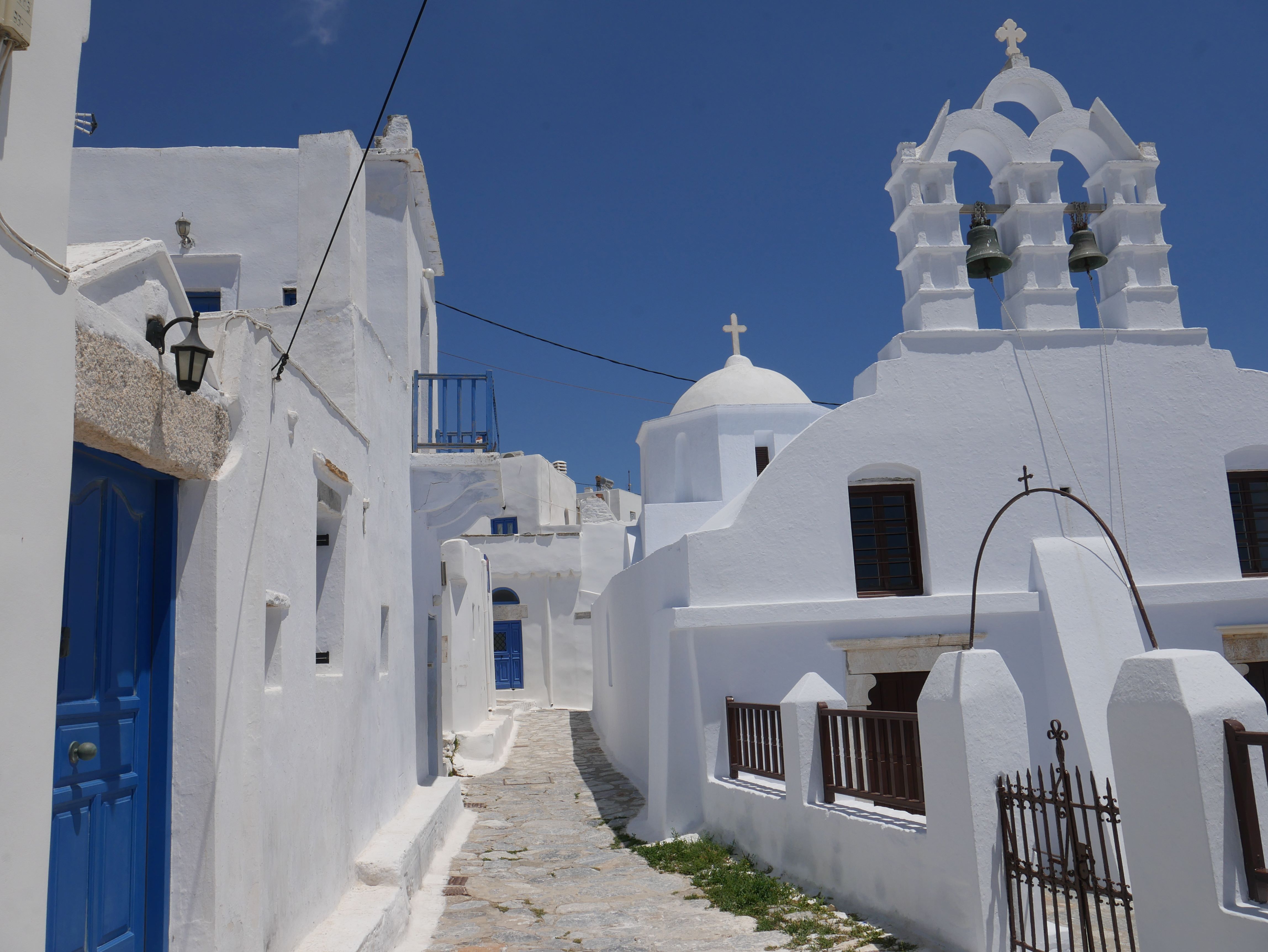
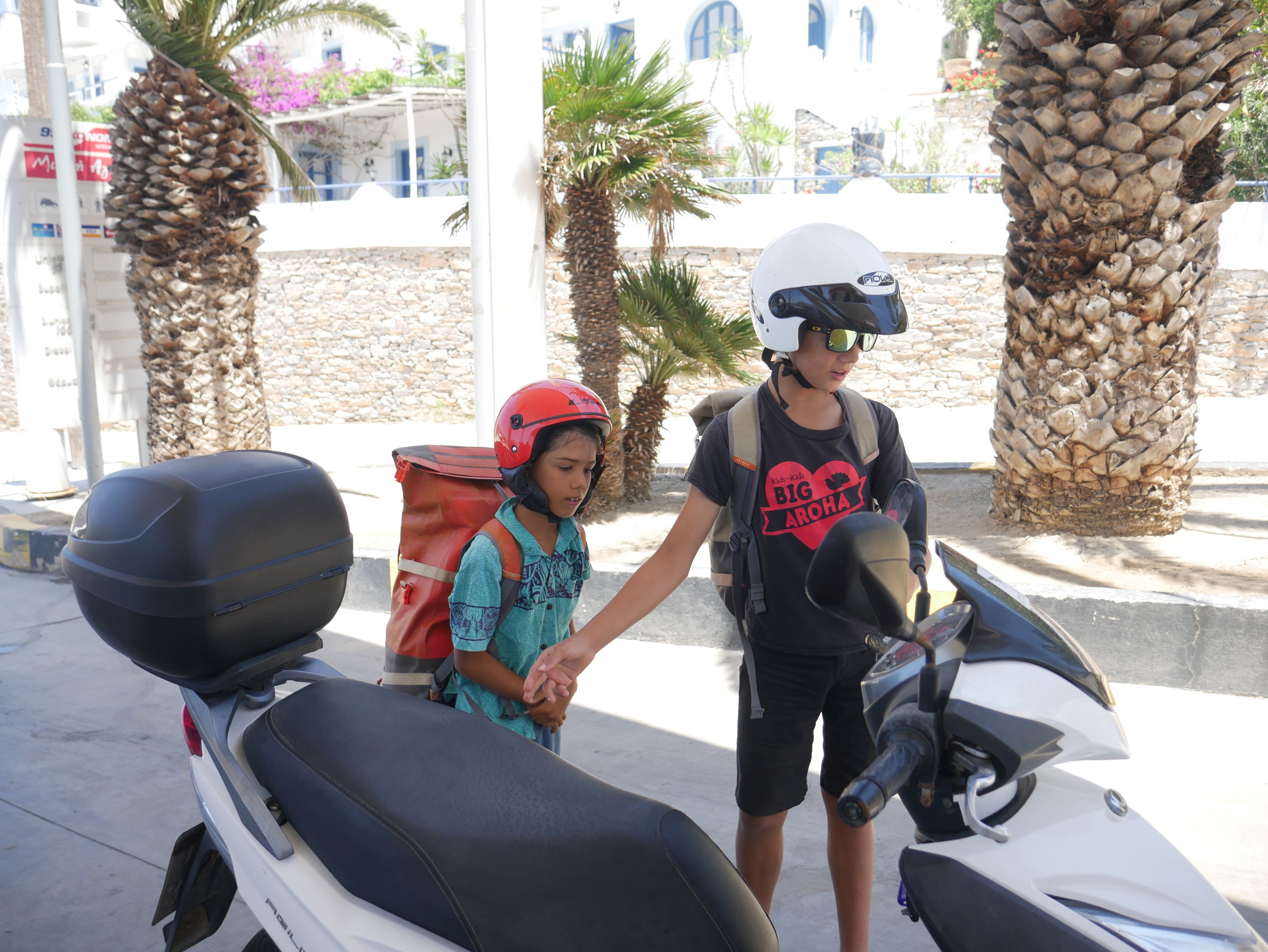
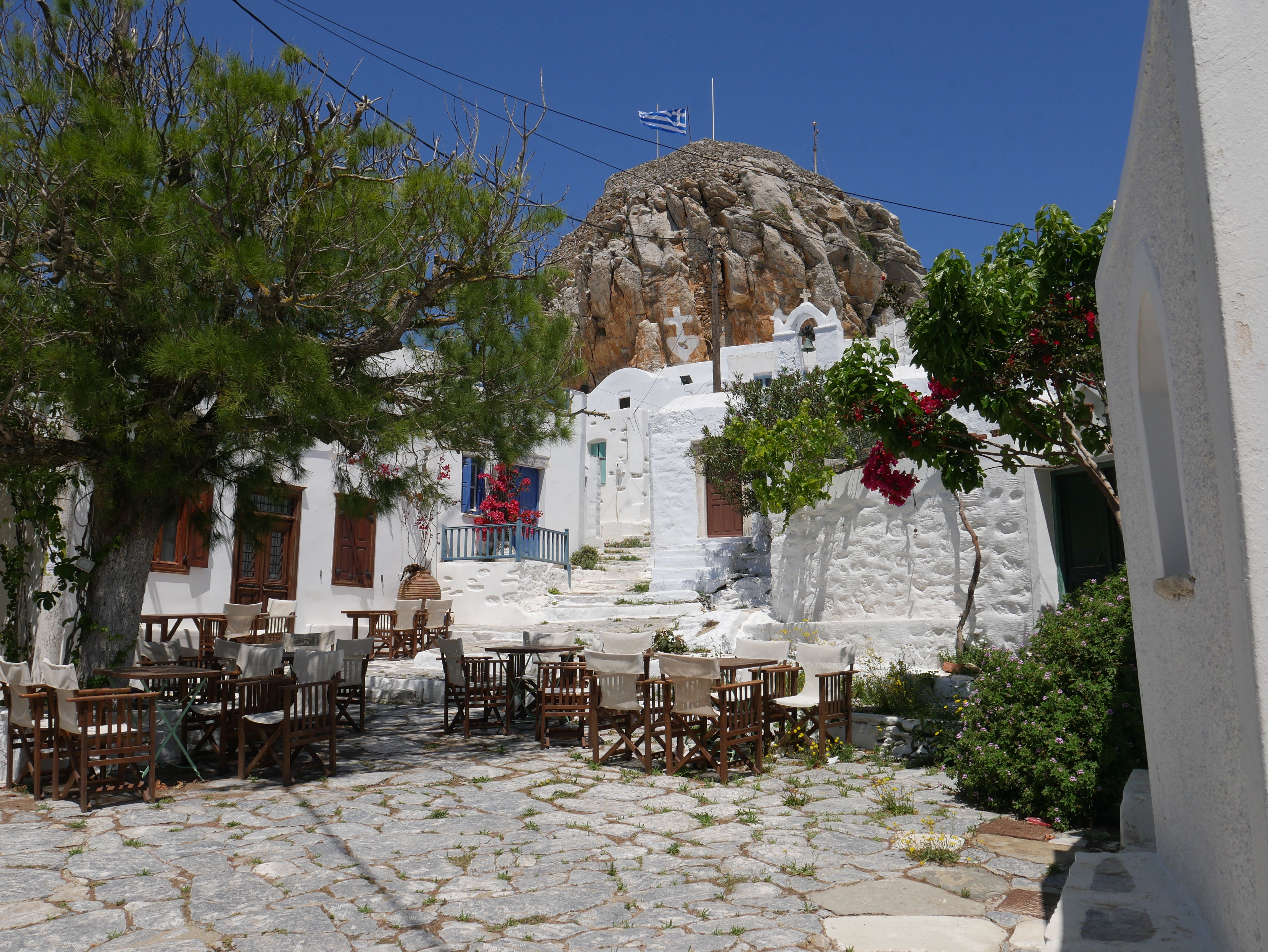
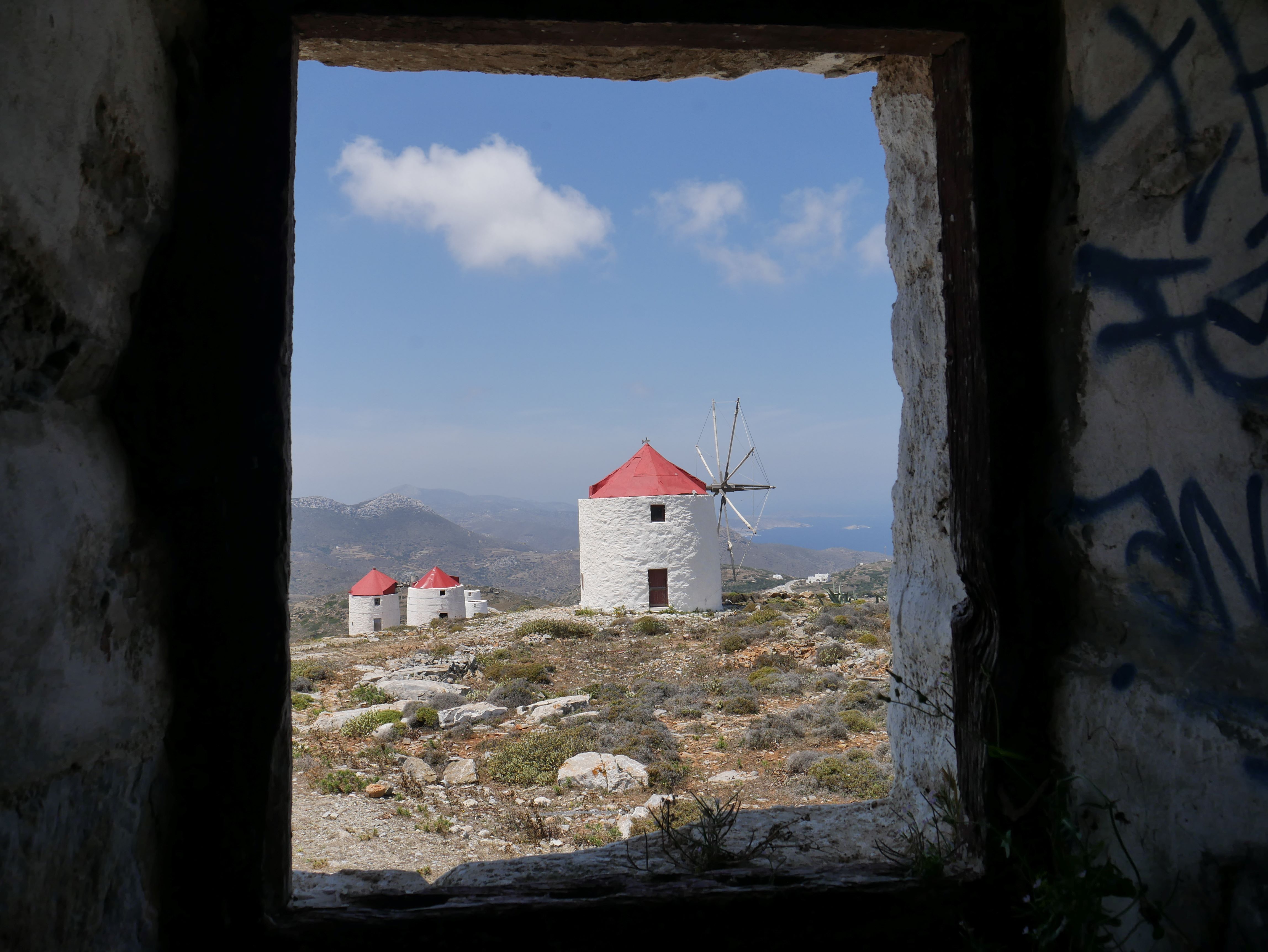
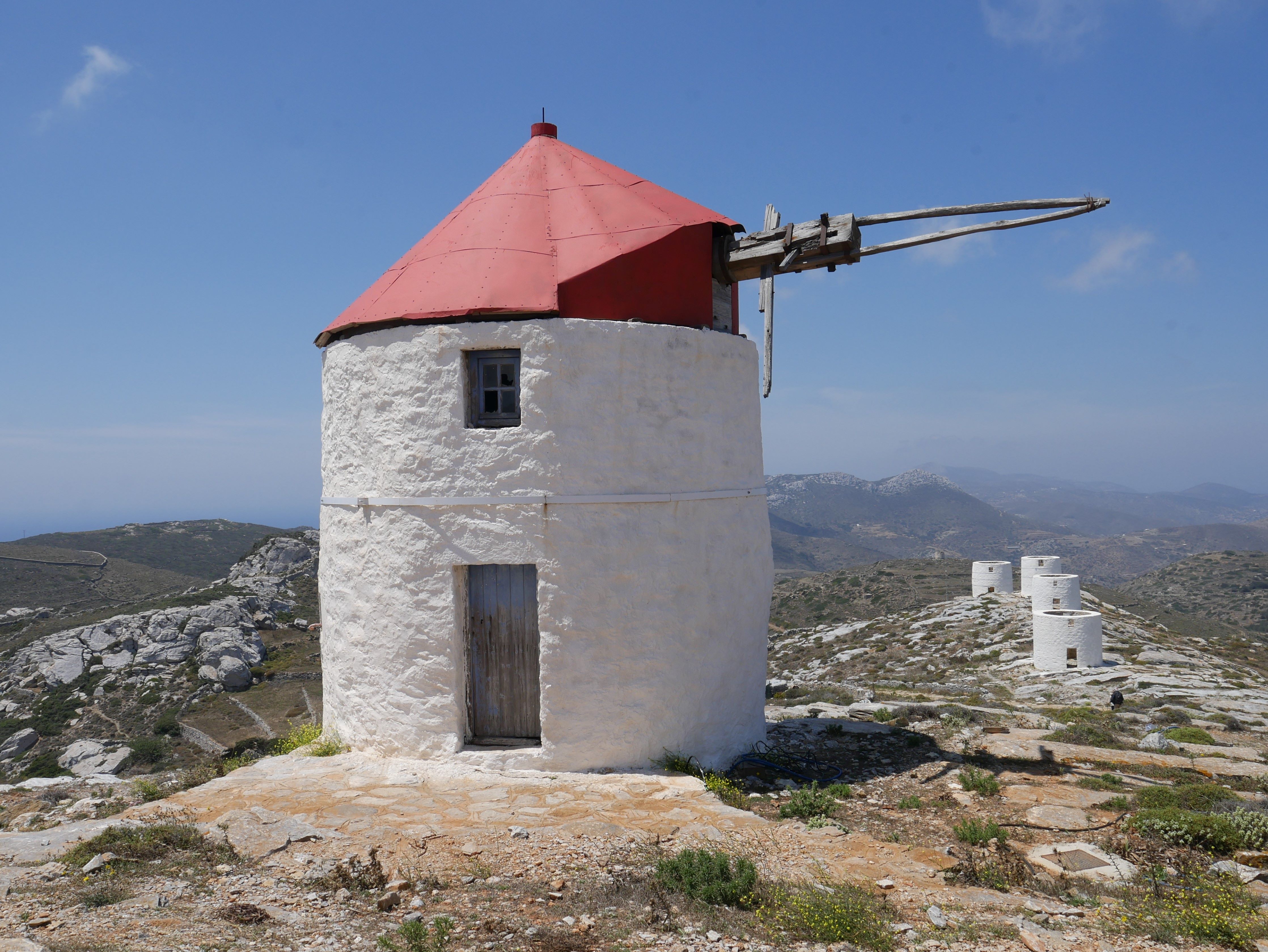
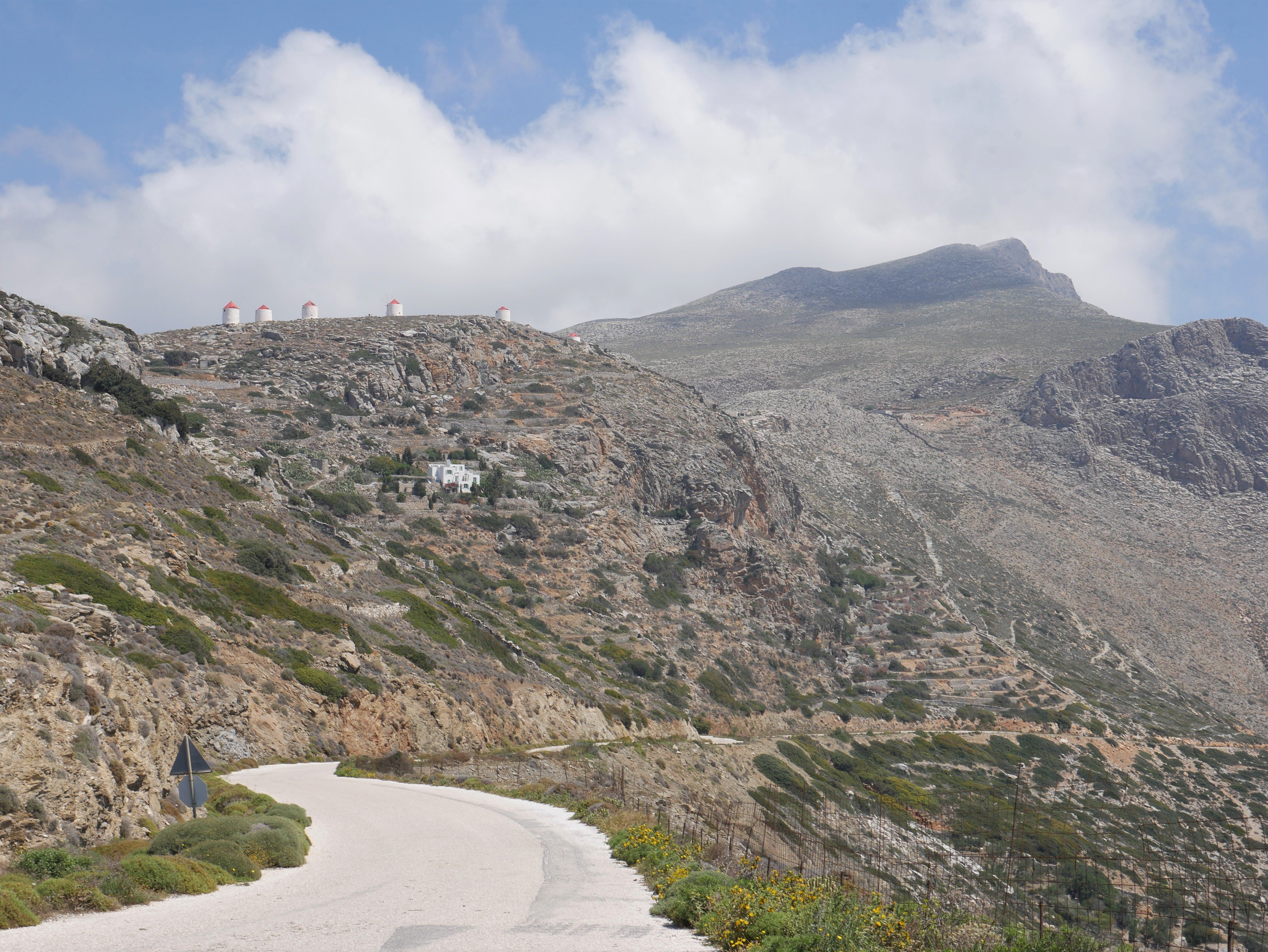
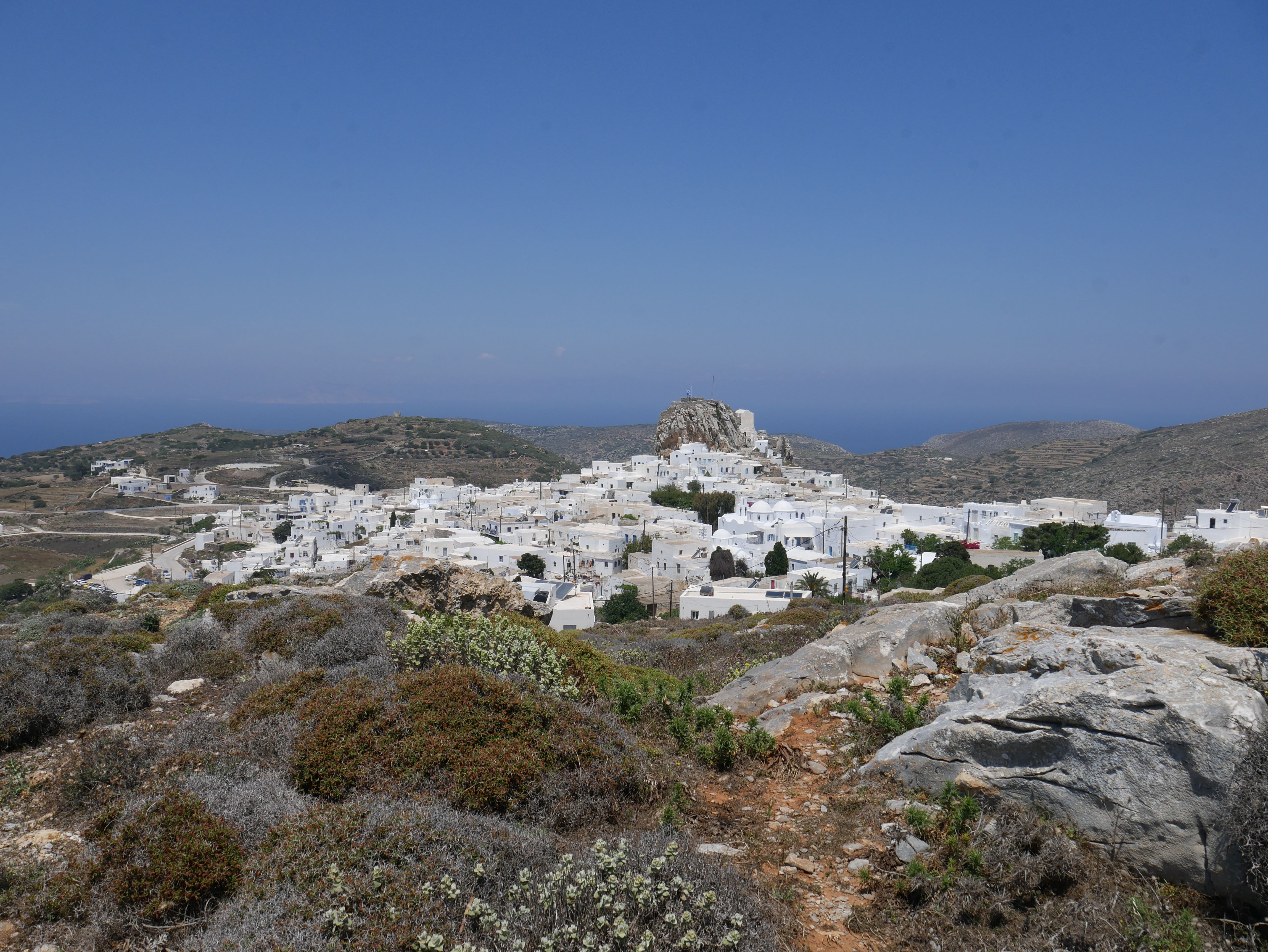
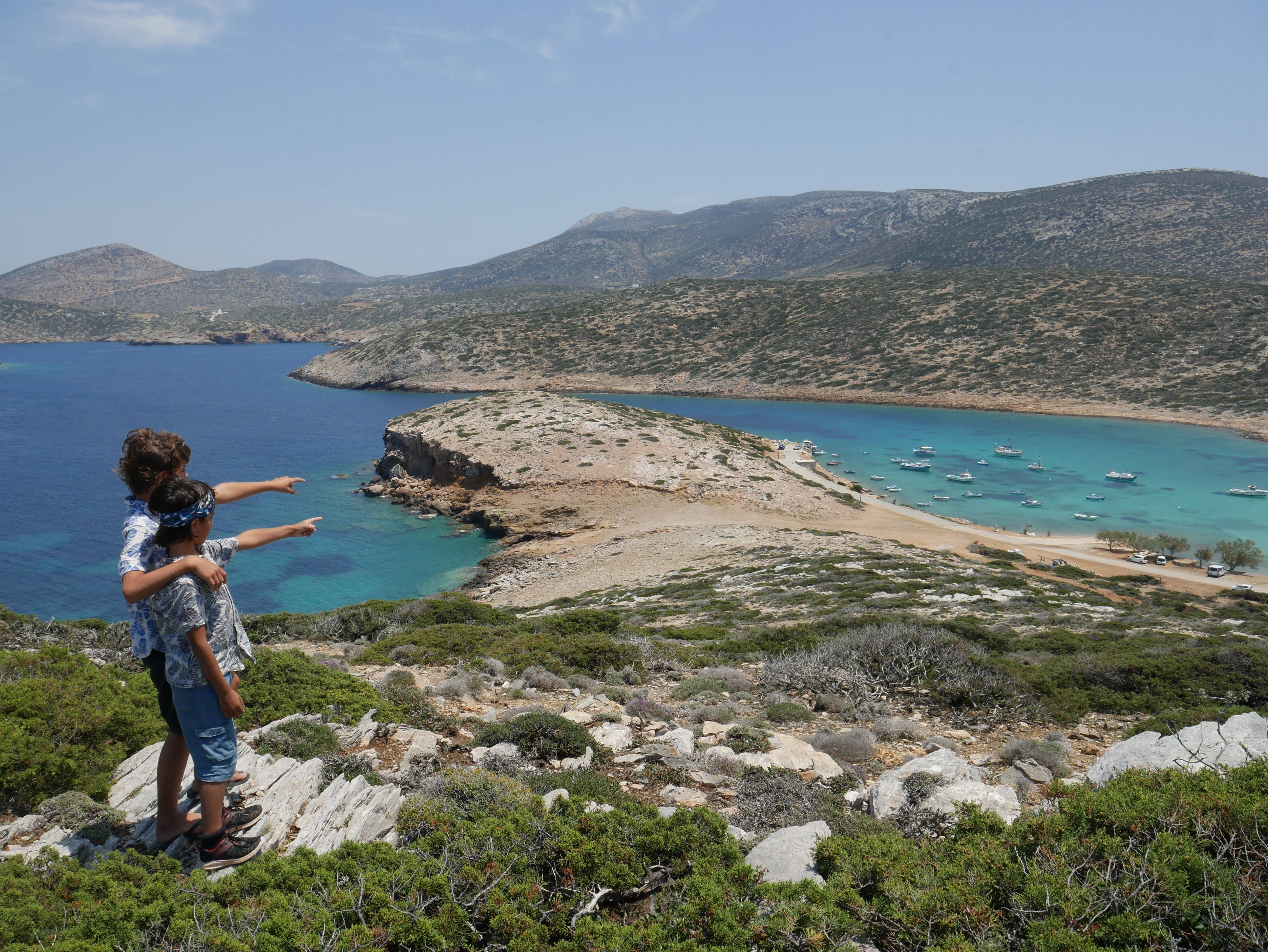
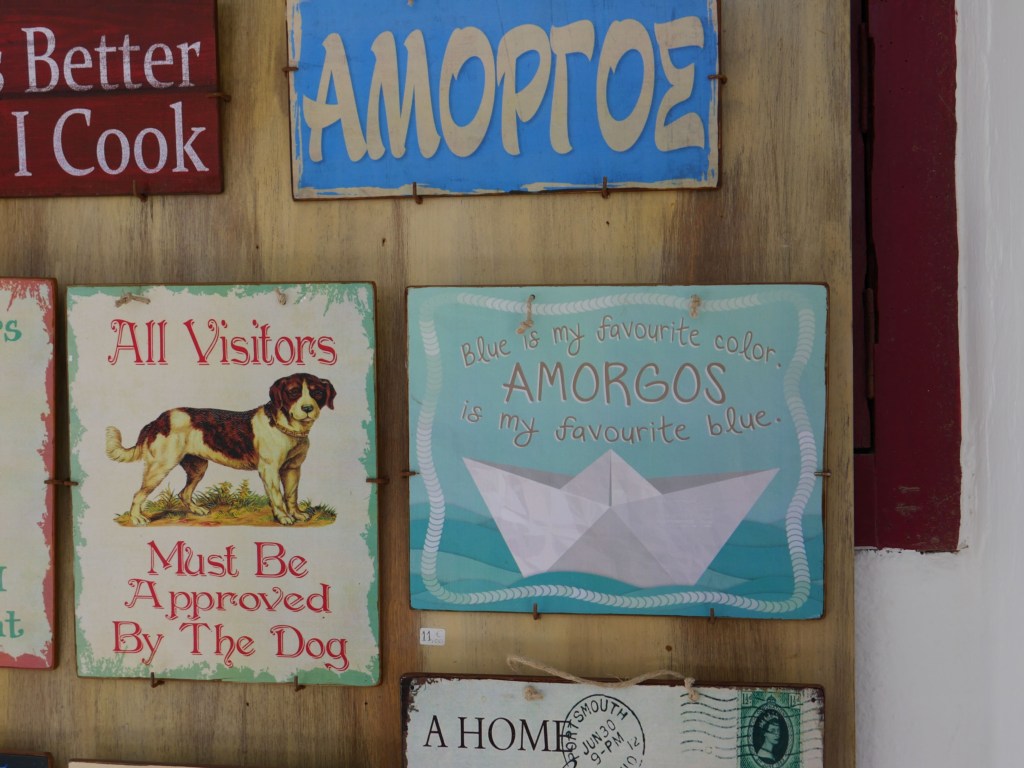
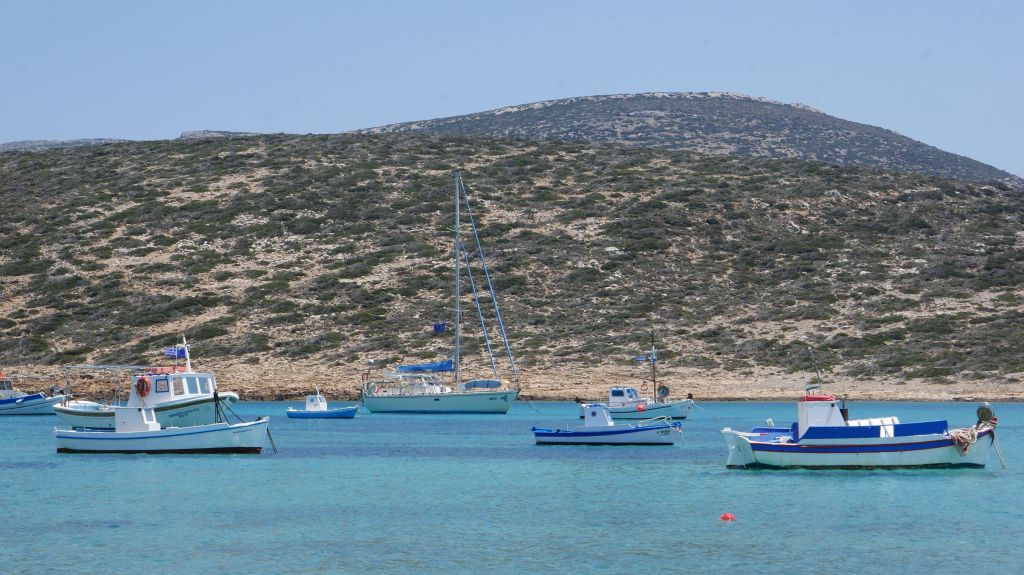
Add to that the unexpected greeting of our first Mediterranean dolphins as soon as we passed the tip of the island on our way from Astypalea towards Kaloraritissa, where for once Obelix wasn’t the smallest vessel in the bay but on the contrary was dwarfing all the local blue and white fishing boats, the stunning views on Katapola from the road to the Hora, or from the ancient site of Minoa, the very moderate number of tourists met, and the encounter with German fellow sailors and tango dancers improvising a mini-milonga on the dock, and you’ll easily understand why we have a soft spot for Amorgos, which surrounding big blue is so intense it might well become our favourite blue too.
 Obelix Odyssey